Semrush is one of the most accurate search engine optimization (SEO) and digital marketing tools available today.
Whether you want to look up keyword volume, track keyword rankings, run a site audit, or conduct in-depth competitive research, Semrush is a good choice.
How Accurate is Semrush Data?
While no SEO tool is 100% accurate all the time, Semrush comes close.
When you use Semrush, the data you see is highly reliable. This is because the company only sources data from Google and other reputable sources. The Semrush team also spends a lot of time researching ways to make their data sets cleaner and more trustworthy.
For a complete overview of the tools in Semrush, check out our detailed Semrush review. In this article, we’ll take a closer look at the information you'll get from different Semrush tools.
Keyword Research Data
I consistently find that Semrush delivers results for more keywords than any other platform—I rarely have to refresh specific keyword results. When I do, though, Semrush always returns updated search volume and keyword difficulty data.
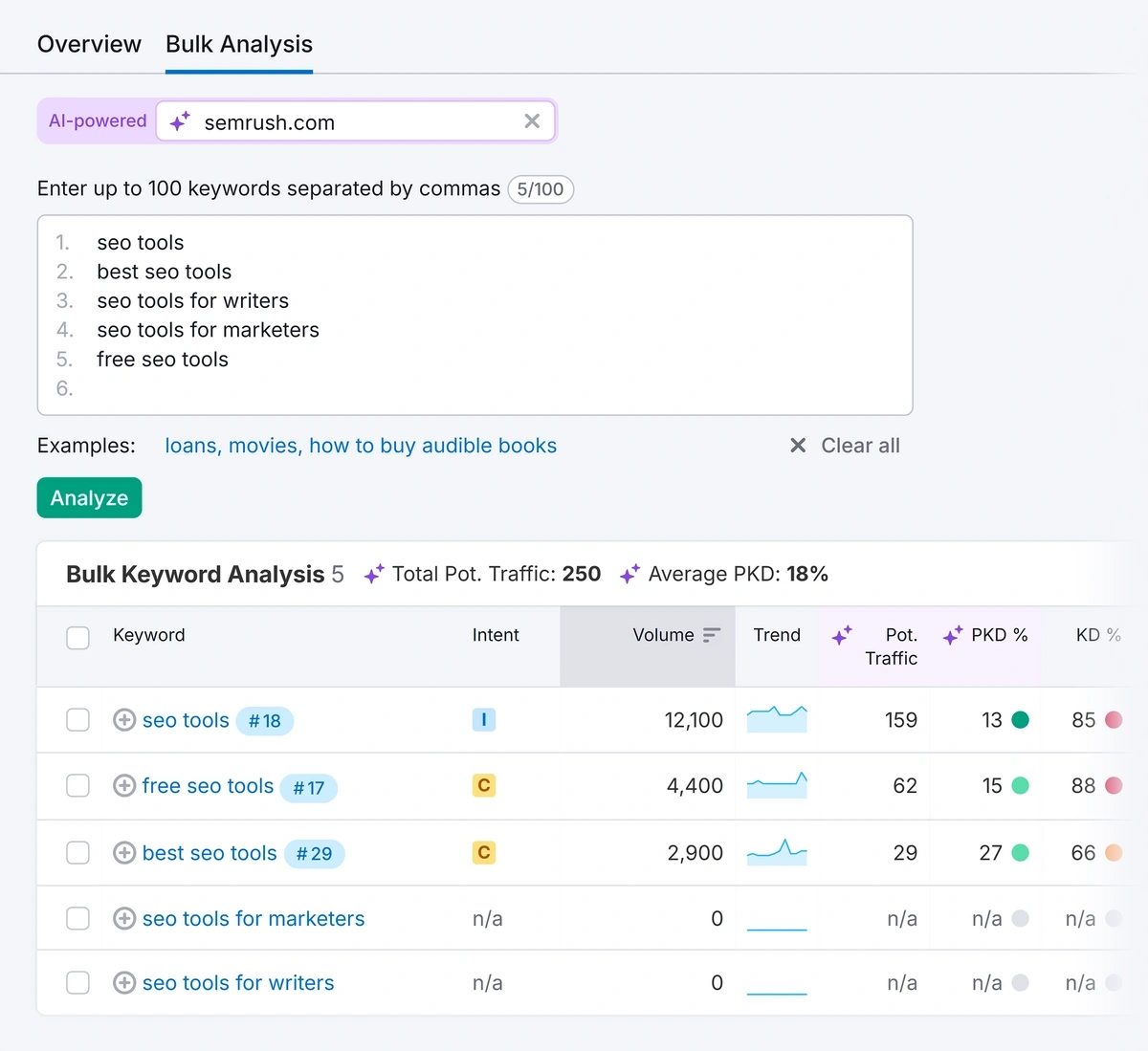
This is because the Semrush database is vast—and always growing.
My research indicates that the platform’s database includes information on 98% of all keywords searched in the U.S.
The tool also has data on more than 26.4 billion global search terms.
| SEO Tool | Semrush | Ahrefs | SE Ranking |
| Keywords In Database | 26.4 billion | 28.7 billion | 4.9 billion |
| Locations | 142 | 189 | 190 |
These keywords get refreshed every month on a rolling basis. The actual metrics for each keyword are updated daily, ensuring that every keyword has new data within a 30-day span.
Semrush also uses AI to show you how keyword metrics change based on a site’s topical authority. As a digital marketing professional, I find this insight extremely valuable.
I also find that it makes Semrush more accurate than Ahrefs, even though the latter’s keyword database is slightly bigger.
Take a look at how the Keyword Overview tool adjusts keyword difficulty scores for “email marketing strategies” based on domain:
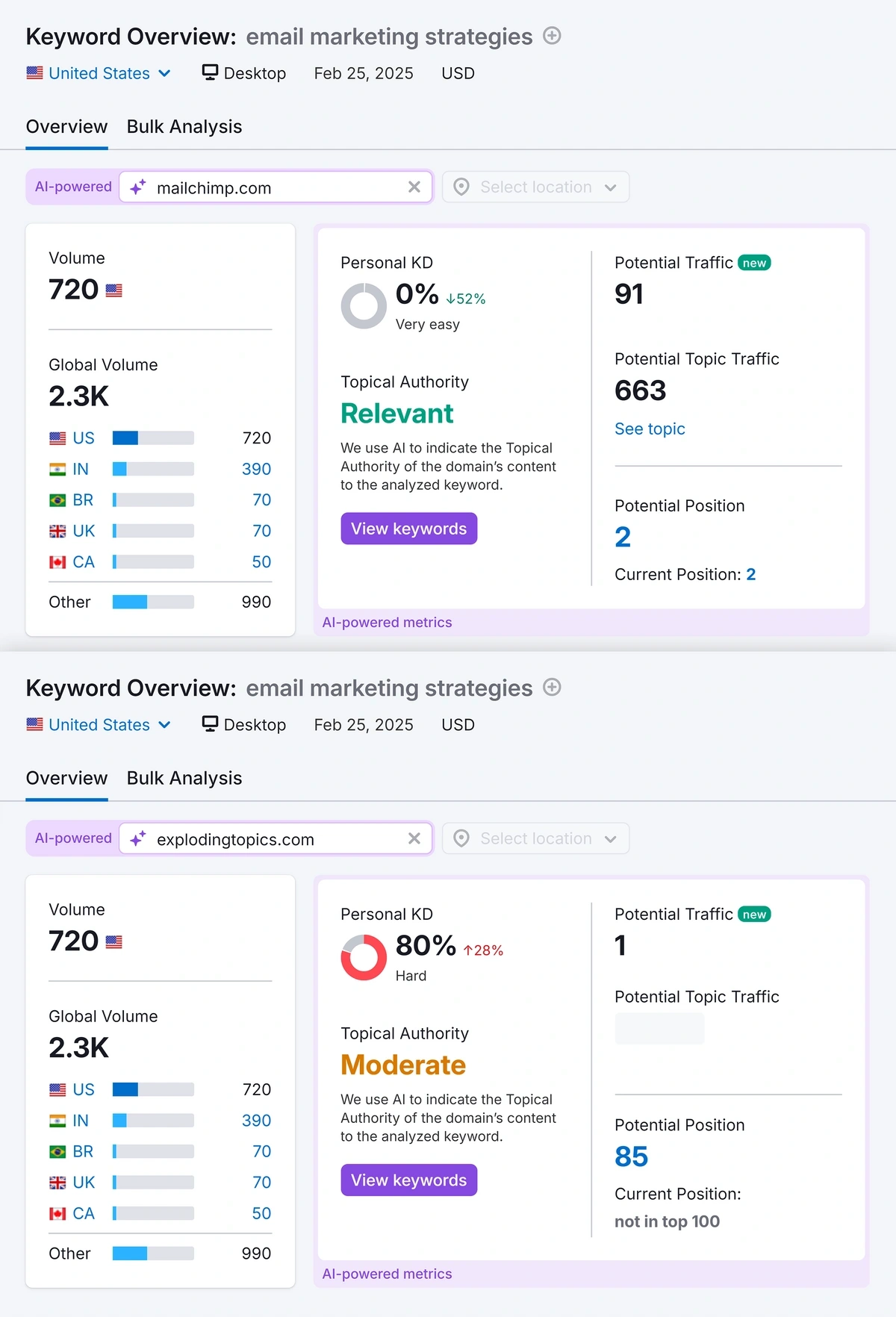
The Verdict: The Semrush keyword research tool is reliable, consistent, and contains data for nearly any keyword you can think of.
Organic Search Traffic Data
When I compared organic traffic data from the Semrush Domain Analytics tool against information available to me in Google Search Console (GSC), I found that Semrush typically displayed a higher monthly website traffic number.
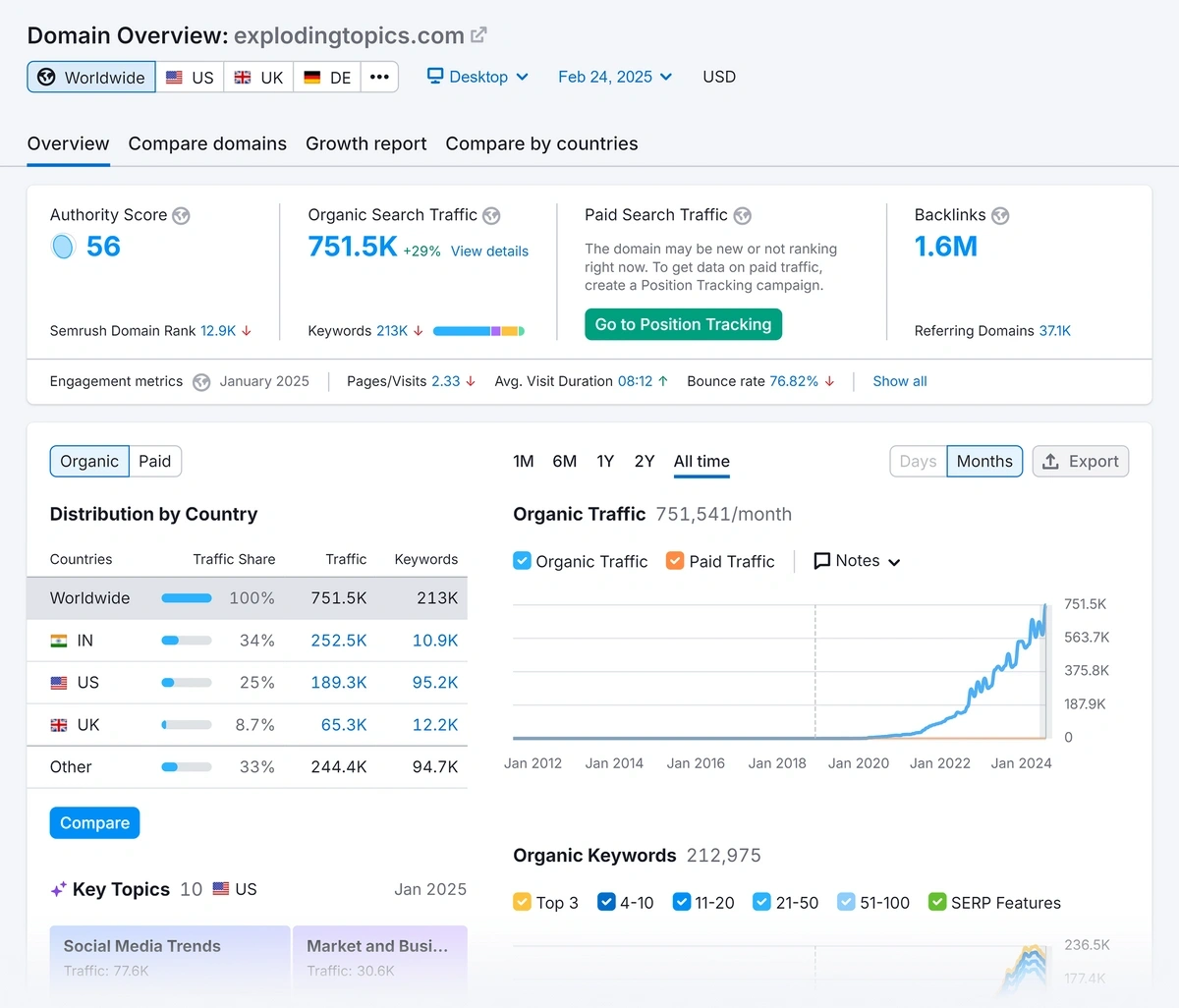
This isn’t surprising to me, as it is a traffic estimate. To see more accurate data, I’d need to have tracking code embedded in my sites. That's not possible when trying to evaluate a competitor site.
When I run a Traffic Analytics report, though, I can see some additional data that’s really interesting. My favorite is the Traffic Journey report that shows me exactly how people are arriving on a site—and where they go next.
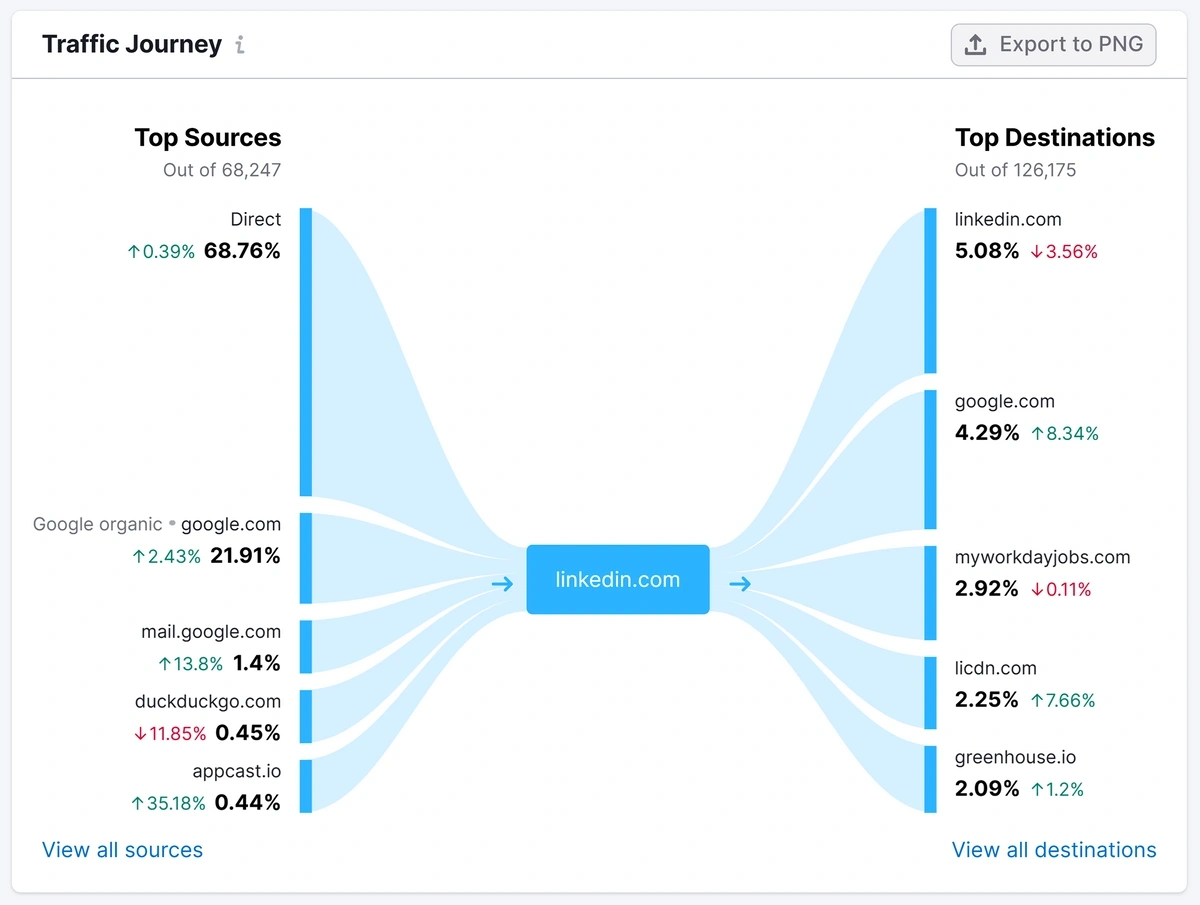
I can also see some top-level information about web pages per visit, visit duration, and bounce rates.
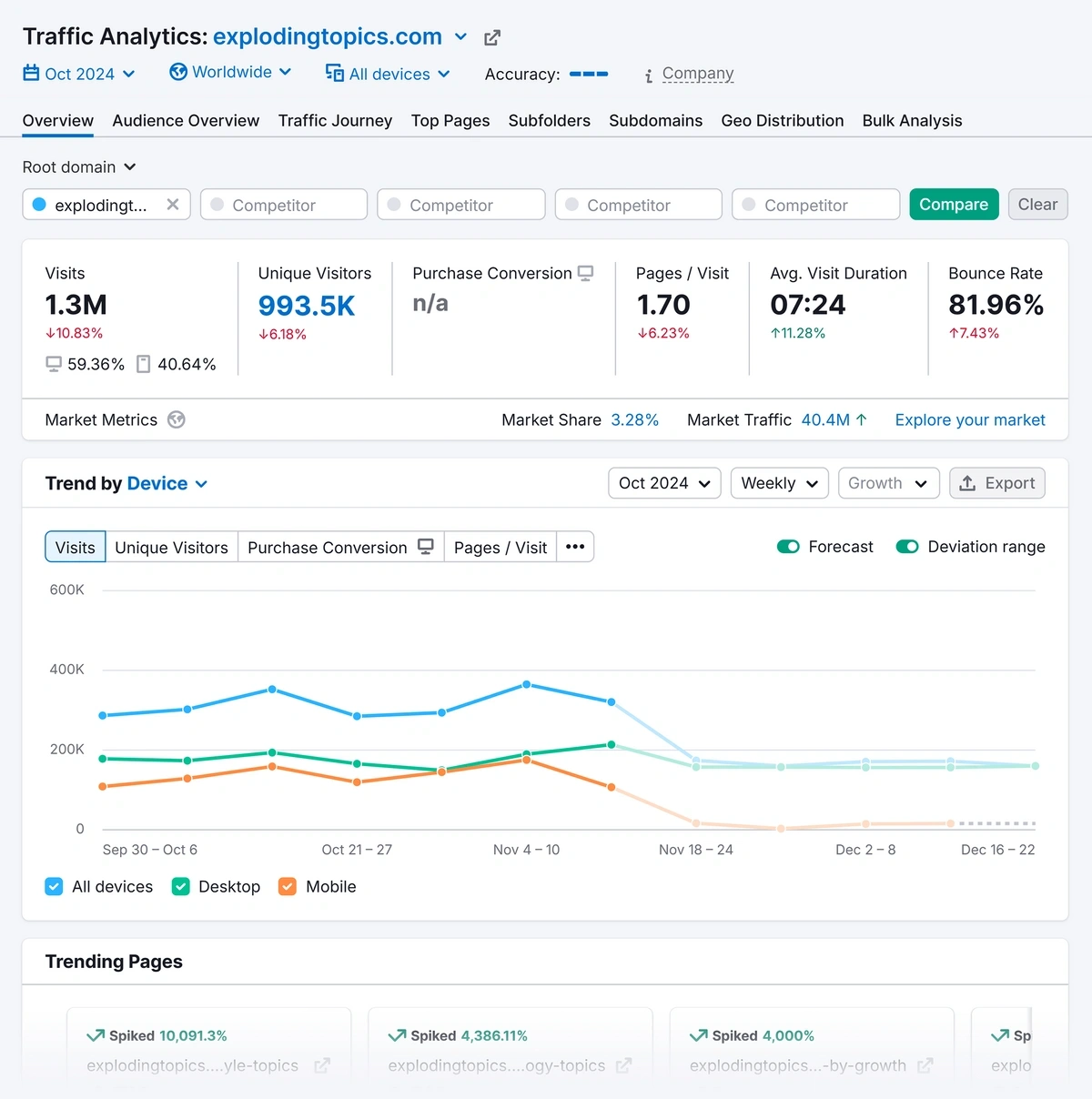
The Verdict: Semrush traffic data is an estimate, which means it won’t be as accurate as your GSC or Google Analytics account—but it’s awesome to have when doing a competitive analysis.
Paid Search Data
Semrush sources paid search information right from Google search engine results pages (SERPs), so it’s accurate and trustworthy.
I like how Semrush collects and displays all the information you could possibly want to know about paid search in one spot.
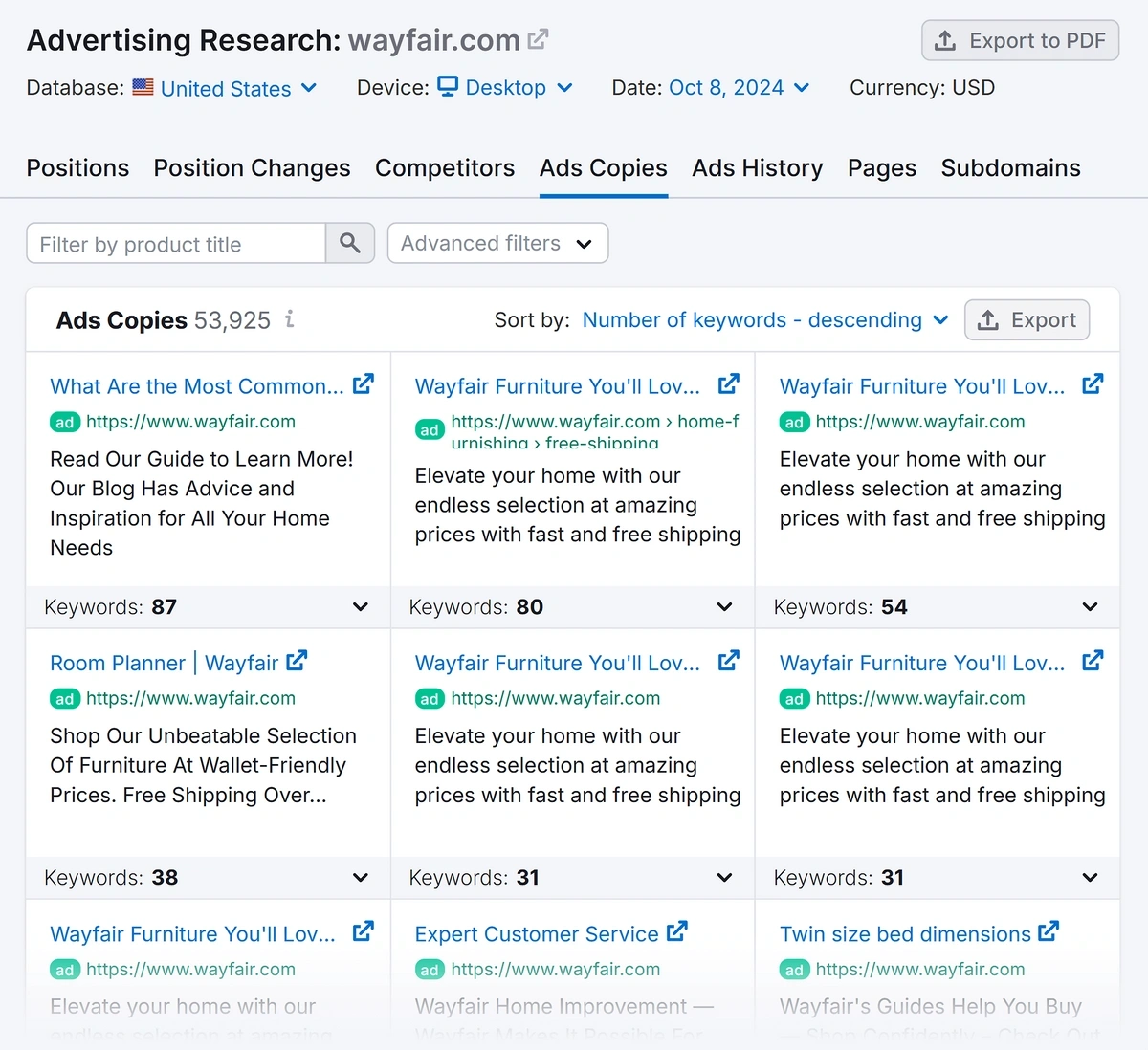
Let’s say you look up a competitor using the Semrush Advertising Research tool. You’ll be able to see:
- The total number of keywords with paid search results for this company
- The traffic generated by these paid ads
- What keywords the company has added or dropped from its paid strategy over time
- What their actual ad copy looks like
The Verdict: If you want to “spy” on your competitors’ pay-per-click (PPC) strategy, Semrush is a great way to see several key details in one spot.
Backlink Data
Semrush maintains data on 808 million domains and 43 trillion backlinks. In my opinion, they also offer the most detailed backlink analysis out of any competitor.
| SEO Tool | Semrush | Ahrefs | SE Ranking |
| Backlinks In Database | 43 trillion | 57 trillion | 3 trillion |
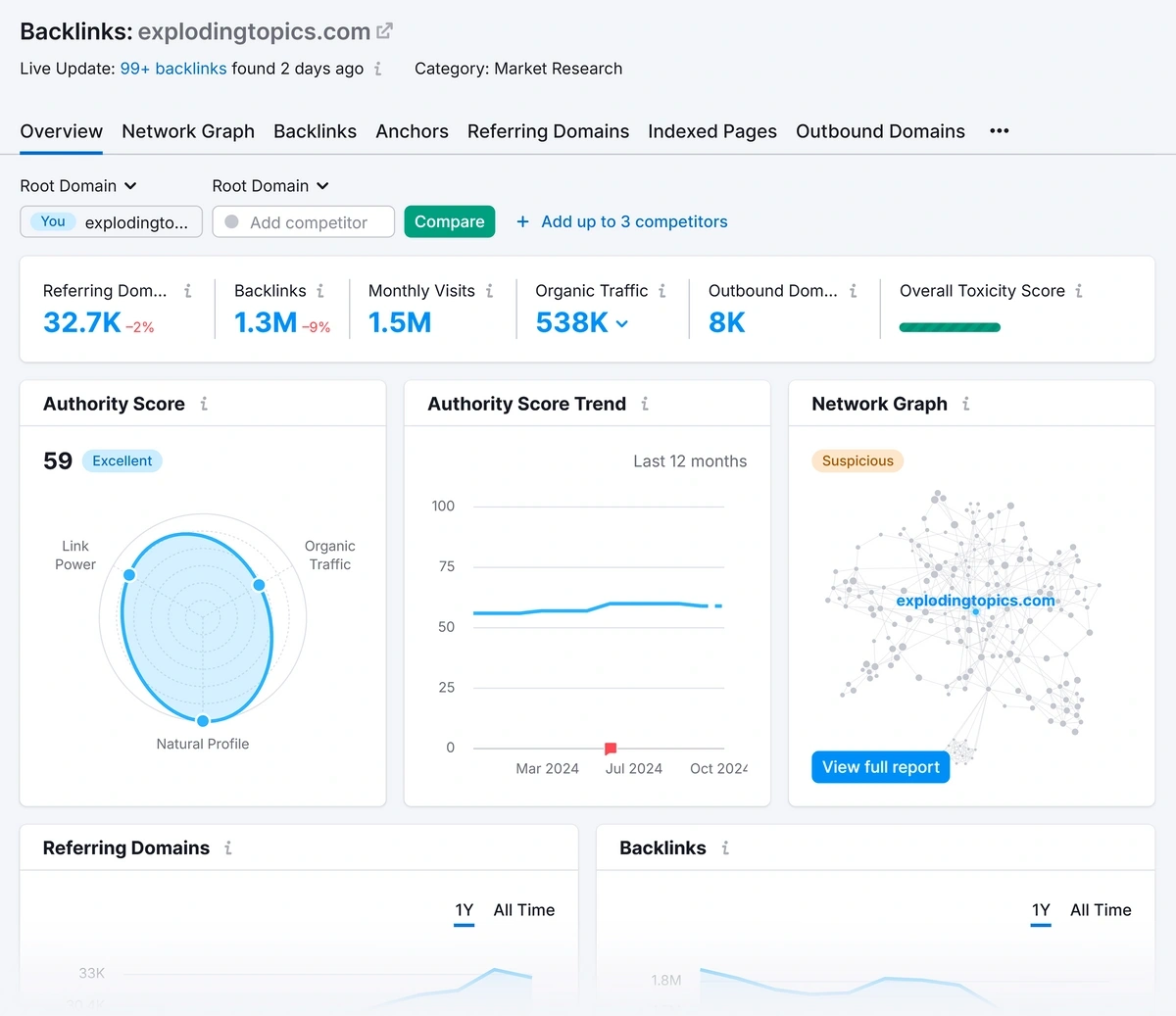
You can plug any domain into the Backlink Analytics tool and see:
- Total referring domains
- Total backlinks
- Backlink changes
- Top backlink anchor text
- Referring site categories
- Referring site authority scores
- Types of backlinks
- TLD distribution
- Sites with similar backlink profiles
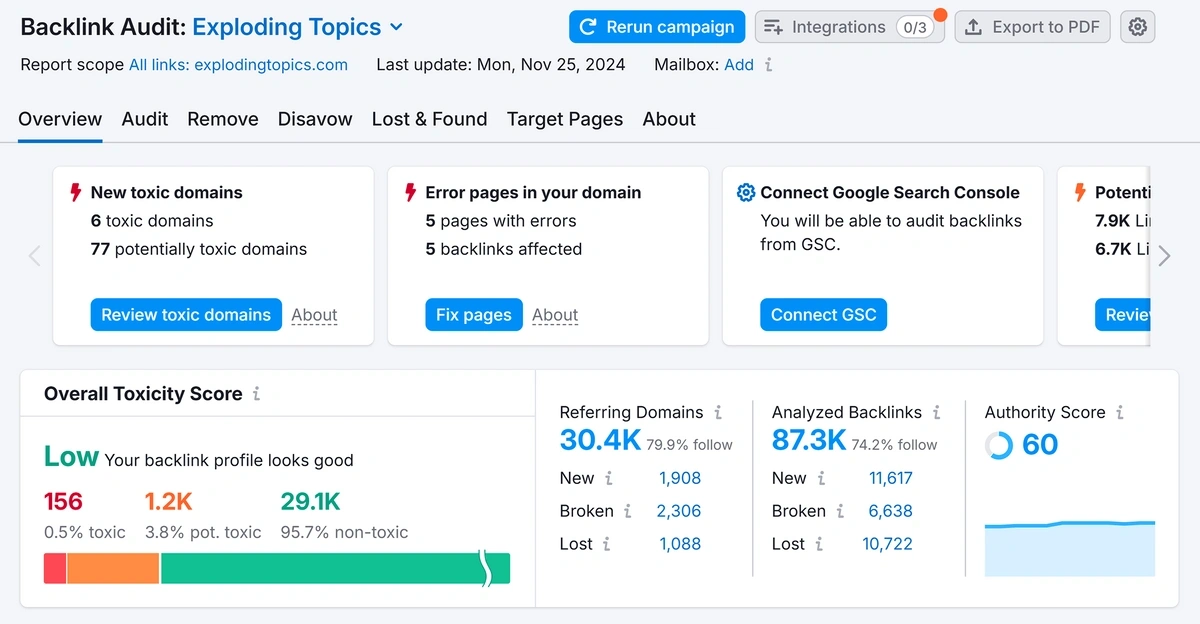
If you want even more data (and what marketer doesn’t?), a Backlink Audit will show you:
- How toxic your site’s backlink profile is
- How many backlinks to your site are broken
- Which backlinks you should consider for removal
Semrush even gives you ways to contact other website owners, whether you want to request they remove a toxic backlink or you’d like to ask for a new, healthy link back to your site. (The Semrush Link Building tool makes this incredibly easy.)
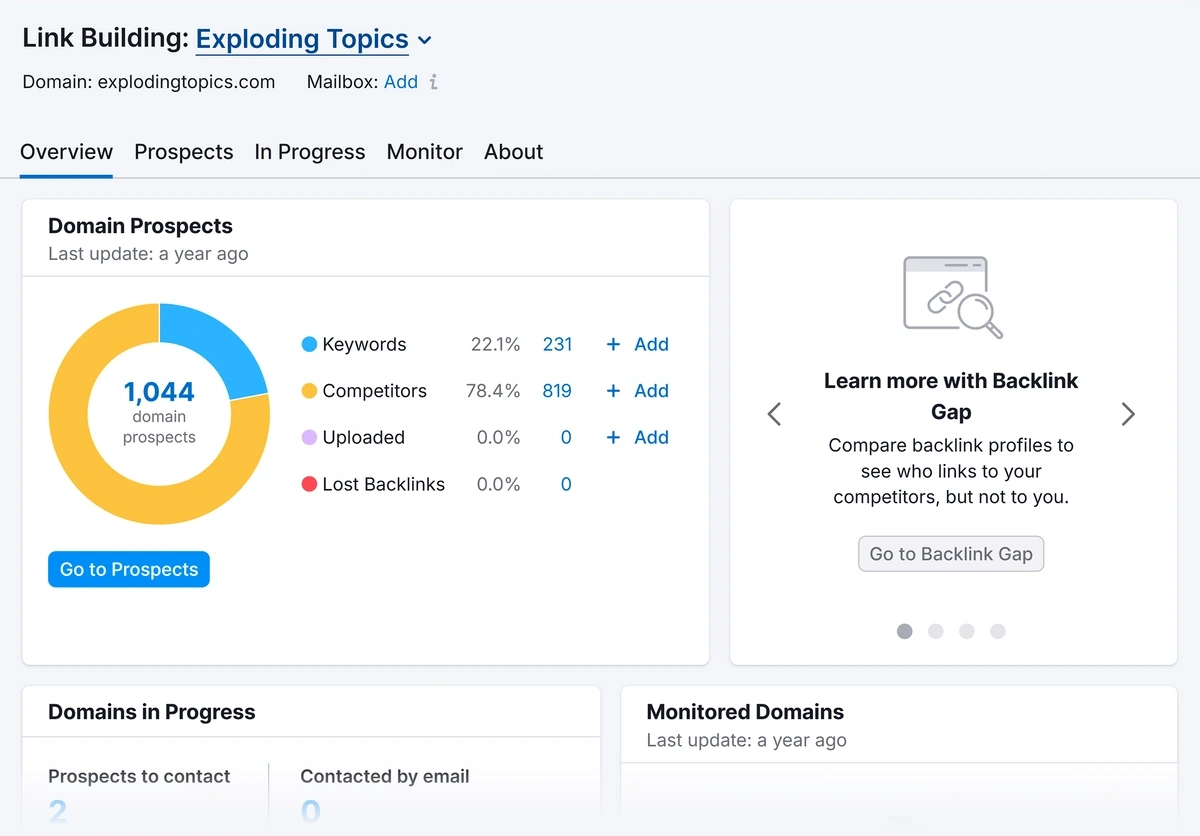
The Verdict: Semrush backlink data and tools are not only accurate, but valuable. If you want to improve your backlink profile, this is the place to start.
Local Advertising Data
Semrush also provides reliable information about your (and your competitors’) Google Business Profile and Google Maps activity. The database includes information on over one billion Google ads dating back to 2012.
Through the Semrush Local Listing Management tool, you can see:
- Visibility on over 150 directories
- Views from Google Search and Maps
- Google Maps ranking trends
- Online review reputation summaries
You can also make changes to your local strategy based on the data from Semrush, then push updates or new ad copy out to maps and directories.
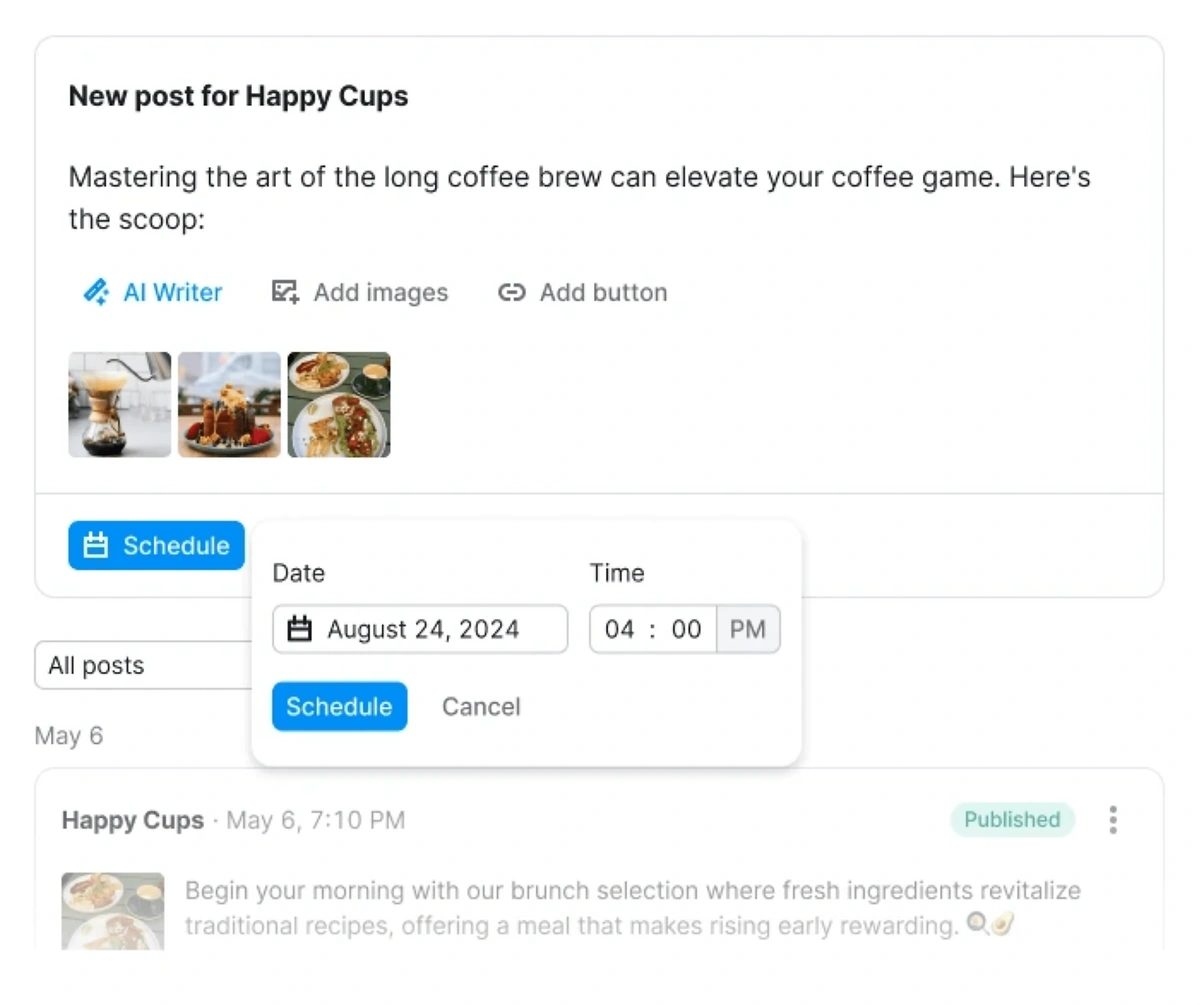
The Verdict: Semrush is a convenient way to manage your local profiles, and its data about competitors’ businesses and ads can reliably help you gain a competitive edge.
Social Media Data
While Semrush does let you view and manage your social media account data, you have to link your existing accounts to the platform.
This is certainly convenient for social media management, but you can find this data directly through your existing accounts.
If you want to conduct social media research—such as whether a keyword or topic is popular on a specific platform—you need Pro.
Our trend library includes detailed information about which topics are trending on different platforms, and how popular they are.
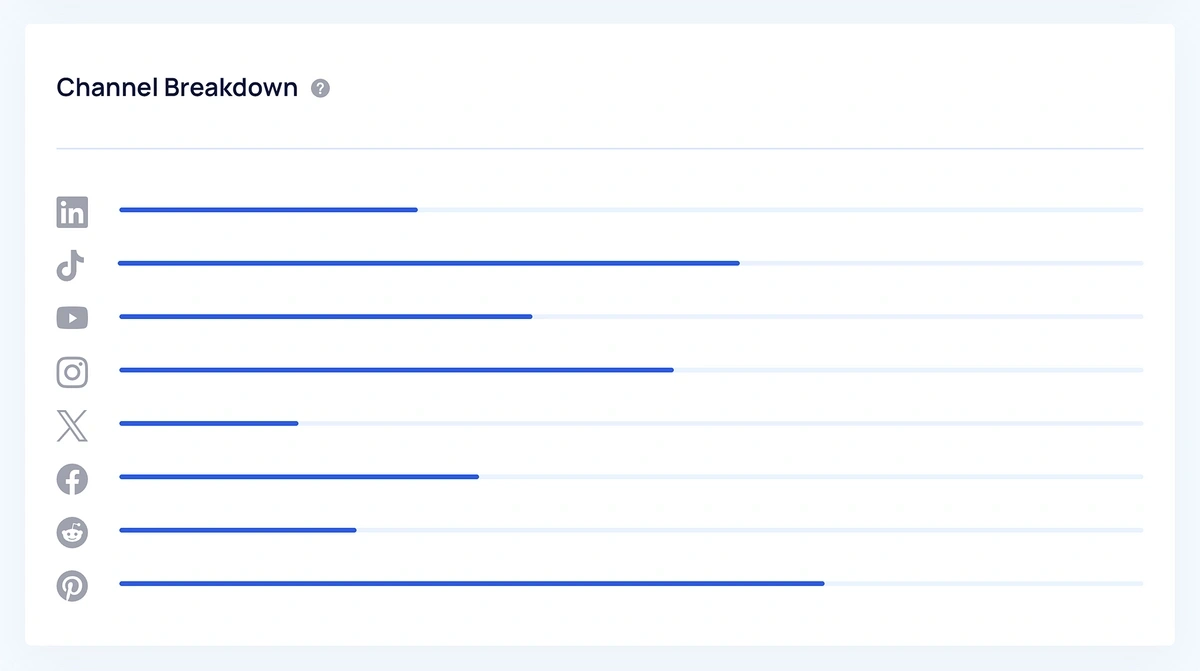
The Verdict: Semrush offers a convenient way to manage your social accounts, but its insights are similar to what each social network provides. Add Pro into the mix if you want to know more about the topics that are most popular on any social media platform.
Ahrefs vs. Semrush: Which Platform’s Data is Accurate?
For a long time, I chose Ahrefs as my main keyword research tool. I found the platform’s keyword, competitor, traffic, and backlink data to be accurate.
The problem was that I couldn’t always get the keyword data I needed through Ahrefs. For me, the issue was not accuracy but consistency.
Many of my keyword searches would return a handful of terms with no information, and I’d need to use up credits in order to refresh the database. But Ahrefs couldn’t always find the information I needed, even after a refresh.
Out of curiosity, I tried searching the same keywords in other tools like Semrush and SE Ranking. I found that I could get results more reliably elsewhere, so I migrated away from Ahrefs.
That said, Ahrefs data is reliable—it just didn’t suit my workflow.
Tip: Check out our Ahrefs vs. Semrush comparison guide to learn more about how these two popular SEO tools compare.
Frequently Asked Questions about Semrush Data
If you’re comparing Semrush with other platforms, you likely have more questions about the data you’ll be access and the limitations of the plans. We’ve collected some of these questions here and will continue to update this article.
Where Does Semrush Get Its Data?
Semrush collects its data through the use of machine learning algorithms, from Google SERPs, and via select third-party data providers. They don’t just dump raw info from their data sources into the tool, though—the Semrush team cleans all of the collected data before expanding the database.
This means that you’re getting consistent, reliable, and accurate information each time you run a report in Semrush.
What Are the Semrush Plan Limits?
The amount of data you can see depends on your Semrush pricing plan.
| Free Plan | Pro Plan | Guru Plan | Business Plan | |
| Daily Keyword Reports | 10 | 3,000 | 5,000 | 10,000 |
| Keyword Report Results | 10 | 10,000 | 30,000 | 50,000 |
| Historical Data | None | None | 2012-Present | 2012-Present |
| Tracked Keywords | 10 | 500 | 1,500 | 5,000 |
| Scheduled PDF Reports | 1 | 5 | 20 | 50 |
| Active Projects | 1 | 5 | 15 | 40 |
Semrush also offers Semrush One, a bundle deal that combines the best of the SEO toolkit with the AI Visibility toolkit. It's the best way to monitor your site's SEO and AI analytics for the best value.
Semrush One plans start at $165.17/month when you pay annually. You can get an exclusive 14-day trial that gives you additional time to spend getting to know the features and how they help your site.
How Does Semrush Estimate Traffic?
Thanks to their machine learning capabilities and neural network, Semrush is able to analyze 500 terabytes of raw data every day.
This includes actual Google SERP results for top keywords, as well as all of the most 100 popular sites online.
When you use Semrush, you’re getting information straight from the world’s most popular search engine—not a niche or proprietary platform.
Semrush also has access to 200 million panelists in 190 countries. These users provide anonymous information about how they interact with different companies online.
This is the data that builds out the rest of Semrush’s great competitor insights.
How Does Semrush Calculate Keyword Difficulty?
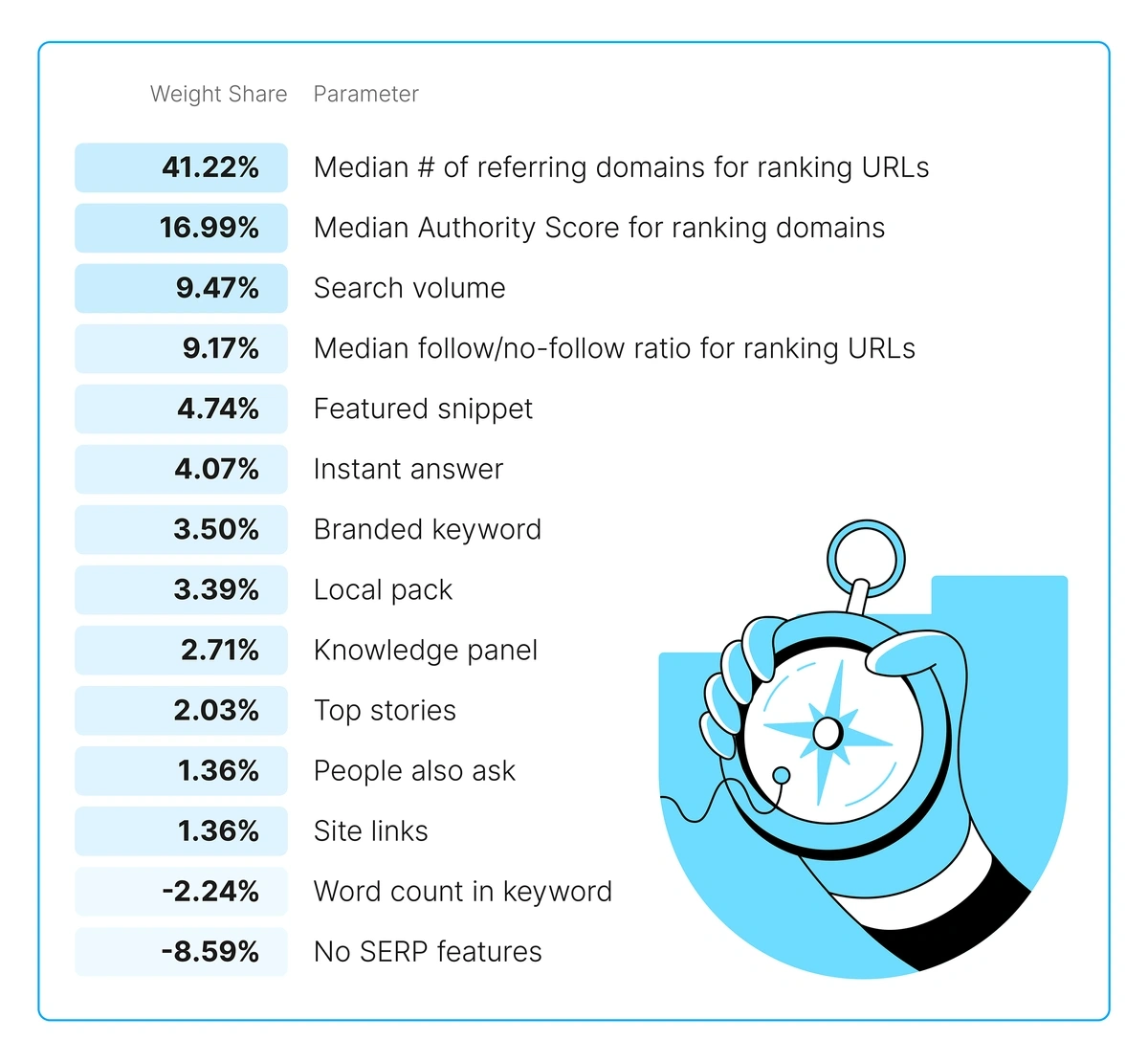
First, Semrush examines the top SERP results for a given keyword. They look at three things:
- The median number of referring domains pointing to the top results
- The median Authority Score of those referring domains
- The median ratio of follow/nofollow links pointing to the top results
Next, Semrush considers a variety of other factors that impact how hard it is to rank at the top of the SERP.
Finally, they adjust the resulting score by country and target domain, should you choose to add one to your search.
What is the Semrush Toxicity Score?
The Semrush backlink toxicity score shows you how many “good” and “bad” backlinks you have pointing to your site.
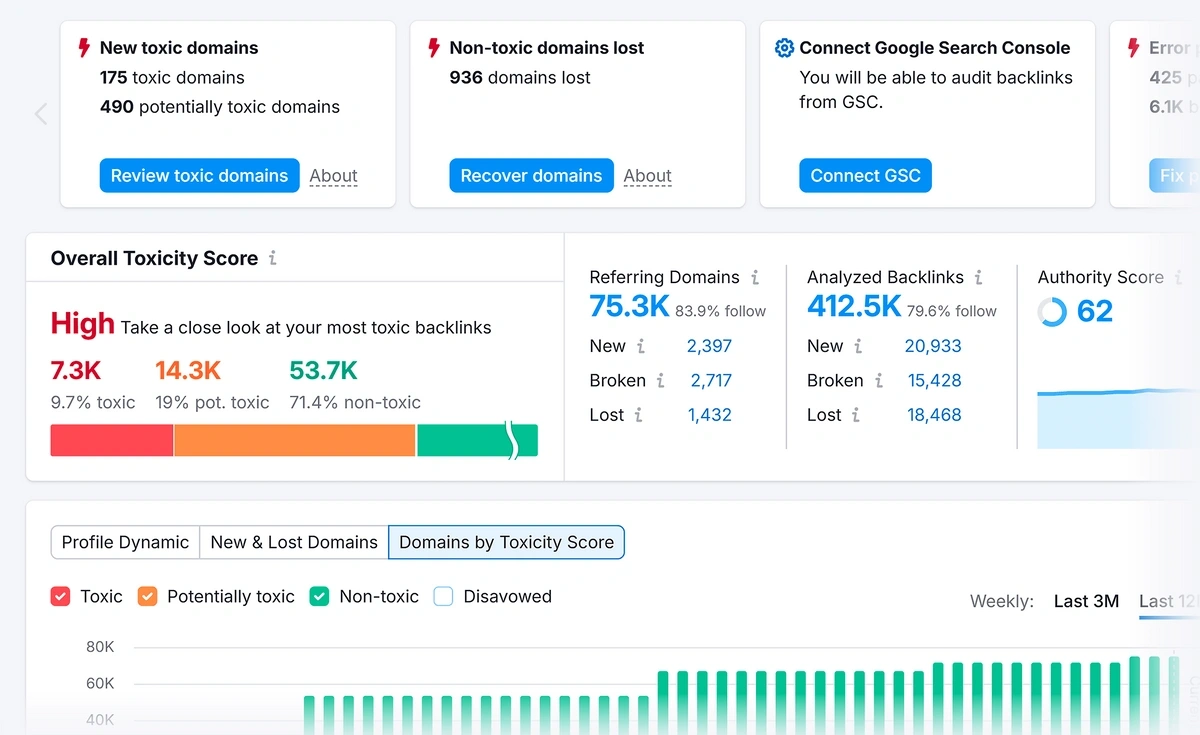
A bad, or toxic, backlink comes from a site that Semrush has flagged for potentially violating Google’s link spam rules.
If most of your backlinks are from these toxic sites, it can negatively impact your SEO.
There are a few different red flags that Semrush looks for when evaluating the toxicity score of any link:
- Does this appear to be a paid/sponsored link without the correct attribute?
- Does this backlink appear to be part of a reciprocal link exchange?
- Is the referring website a known Private Blog Network (PBN)?
- Were these links likely generated by a bot?
- Does the link appear in a forum or social media comment without a UGC attribute?
- Is the link on a known low-quality web directory?
- Is the link coming from a widget embedded on a website?
- Does it seem like these links were created in bulk?
- Was this link possibly placed as part of a contractual agreement?
Improve Your SEO Strategy With Semrush and
I happily used Semrush by itself for a long time—but when I added into the mix, my off page and on page SEO strategy got even better.
When I'm curious about a trend, topic, or market, I turn to first. This allows me to get a sense for what marketing channels to focus on, how popular my ideas might be in the future, and whether a competitor has a hold on the market.
Once I have an idea of the direction I'd like to take my strategy, I turn to Semrush to do keyword research, dig deeper into competitor website rankings, and build out content marketing clusters.
You can try out this same flow for yourself—take advantage of a Semrush free trial, then activate 14 days of Pro for just $1.