already helps you identify emerging trends so you can be the first to offer high-demand products, publish content consumers want to read, and predict your competitors’ next moves.
The API helps you do all of those things better and faster.
The ability to quickly pivot and take advantage of emerging trends can set your business apart and help you outpace competitors. With the power and flexibility of the API, you have a variety of opportunities to stand out and snag new customers before other brands even notice the shift in consumers’ attention.
Why Use the API?
You have a lot on your plate.
You need to keep your e-commerce store relevant, which means staying on top of emerging product trends so you can offer that hot new item before your competitors.
You have to forecast inventory needs so you don’t lose out on sales because the product everyone wants is out of stock.
Or maybe you’re playing the long game and keeping your eye out for macro trends to inform product development.
You have to anticipate what your competitors are working on:
- Analyze sales data
- Understand market opportunities
- Weigh them against your team’s resources
You’re probably sifting through at least half a dozen reports every day trying to account for all the factors that play a role in making your business successful.
Enter: The API.
The API lets you work with trend data outside of the platform. You can analyze it alongside other key business insights so it’s easier to see the big picture and make strategic decisions about your business direction.
It also gives you more flexibility over how you work with your data. You can filter trends to focus on the ones that are most relevant to you, and structure the data to highlight the aspects that matter most for your business.
Plus, API access opens up tons of automation opportunities. Acting fast is crucial if you want to capitalize on trends. Instead of logging in to every day to see what’s new, let your trend data come to you as soon as it’s available.
To put it simply, the API gives you control so you can maximize the value of the trends it discovers.
Is the API Better than the Google Trends API?
The API serves a different purpose than the Google Trends API.
Google Trends uses historical search data to tell you what people are currently searching for. uses proprietary datasets to enhance the information Google Trends provides and identify emerging trends — topics that are ramping up in popularity and will likely “explode” in the near future.
| API | Google Trends API |
| Uses raw search volume numbers to show the potential of trending keywords | Uses relative search volume scores on a scale of 0–100 |
| Incorporates machine learning to forecast the next 12 months of trend growth | Does not include trend growth predictions |
| Highlights emerging trends before they take off | Shows users’ past search interest |
| Best for product ideation, SEO strategy and content planning, market intelligence reporting, inventory planning | Useful for SEO strategy and content planning |
This is a subtle but very important distinction. The Internet moves fast, so relying on Google Trends may mean that by the time you realize a topic or product is trending, it’s too late to take advantage of the hype.
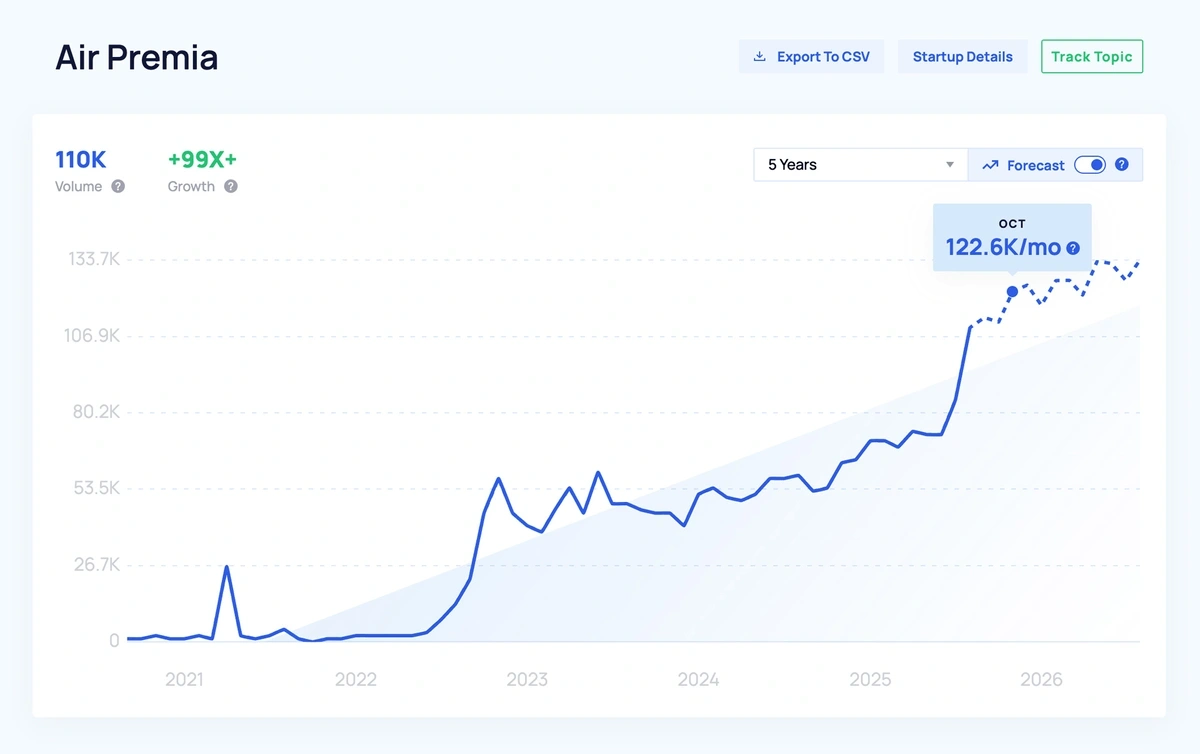
With the API, you’ll be ahead of the curve and can anticipate consumers’ demands before they arise. That makes it one of the top E-commerce APIs (and there are other use cases too).
5 Ways to Use the API
The flexibility of the API is one of its strengths, and there are endless ways to incorporate it into your tech stack based on your specific needs.
But to give you a bit of inspiration, I have a handful of use cases for you to consider.
Send Automated Notifications for Trending Products
Rather than checking every day to catch up on trending products, you can receive notifications about them.
Communication platforms like Slack allow you to connect third-party tools via API using incoming webhooks, then create automated workflows to send messages to public or private channels.
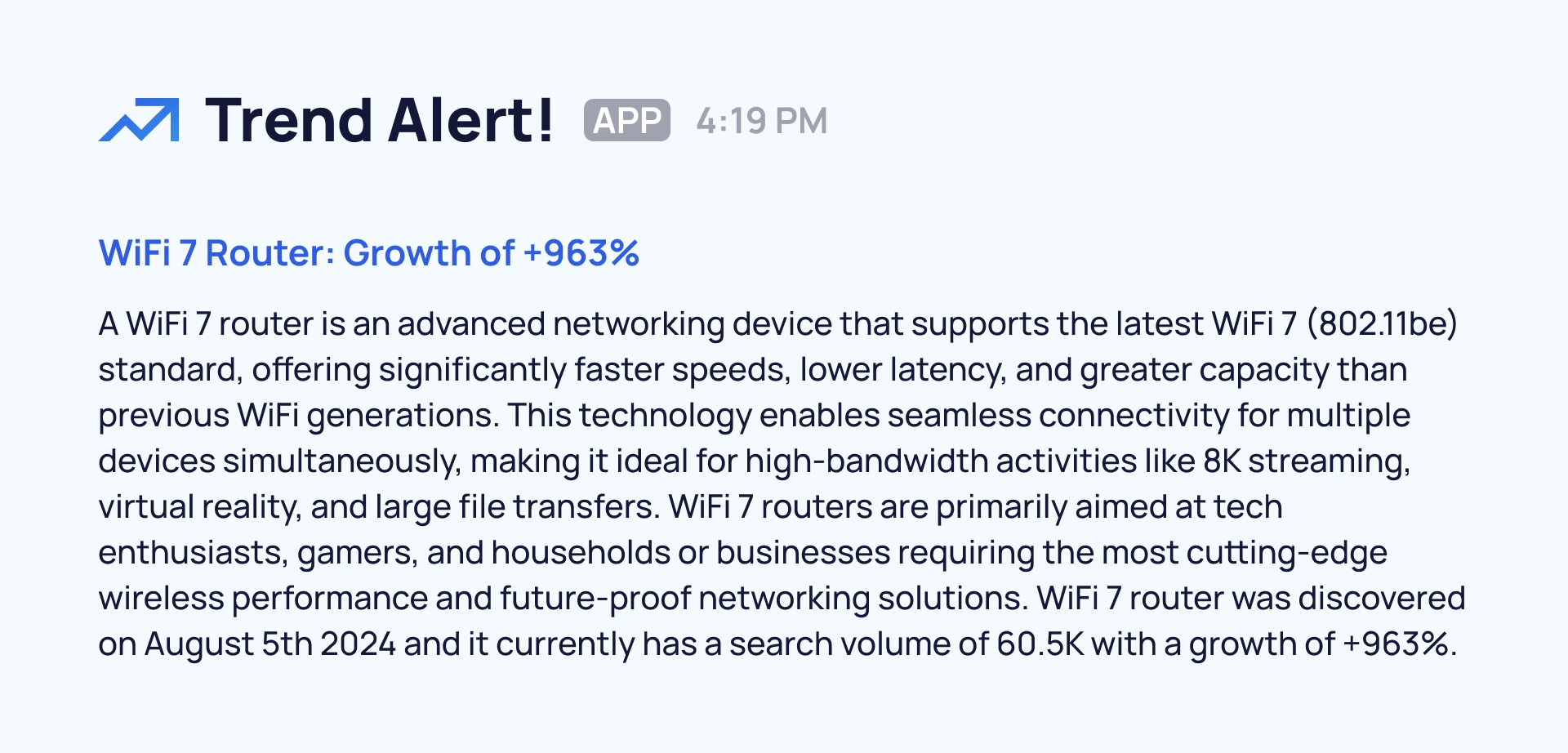
Once your team receives a notification about a trending product (or topic or meta trend, if you want to create notifications for different types of trends), they can act quickly to take the appropriate action.
For example, you might want to:
- Create a Slack channel for automatic alerts about products that have reached a certain growth threshold to inform inventory decisions
- Receive notifications when competitors’ products spike in popularity, and include the timeframe during which the spike occurred so you can understand what marketing techniques they used to drive sales
- Alert your team when seasonal topics start to trend so you can prepare marketing campaigns and inventory accordingly
- Send a message to a channel for new product ideas when trending products in your niche reach certain growth criteria
Automated notifications save time and streamline communication so you can initiate your workflows sooner and avoid missing out on profitable products.
Implement Automated Workflows to Capitalize on Trends
If you want to take it a step further, you can go beyond automated notifications and run entire workflows with the API.
Using a workflow automation tool like Zapier, Make.com, or n8n, you can hop on key trends without lifting a finger.
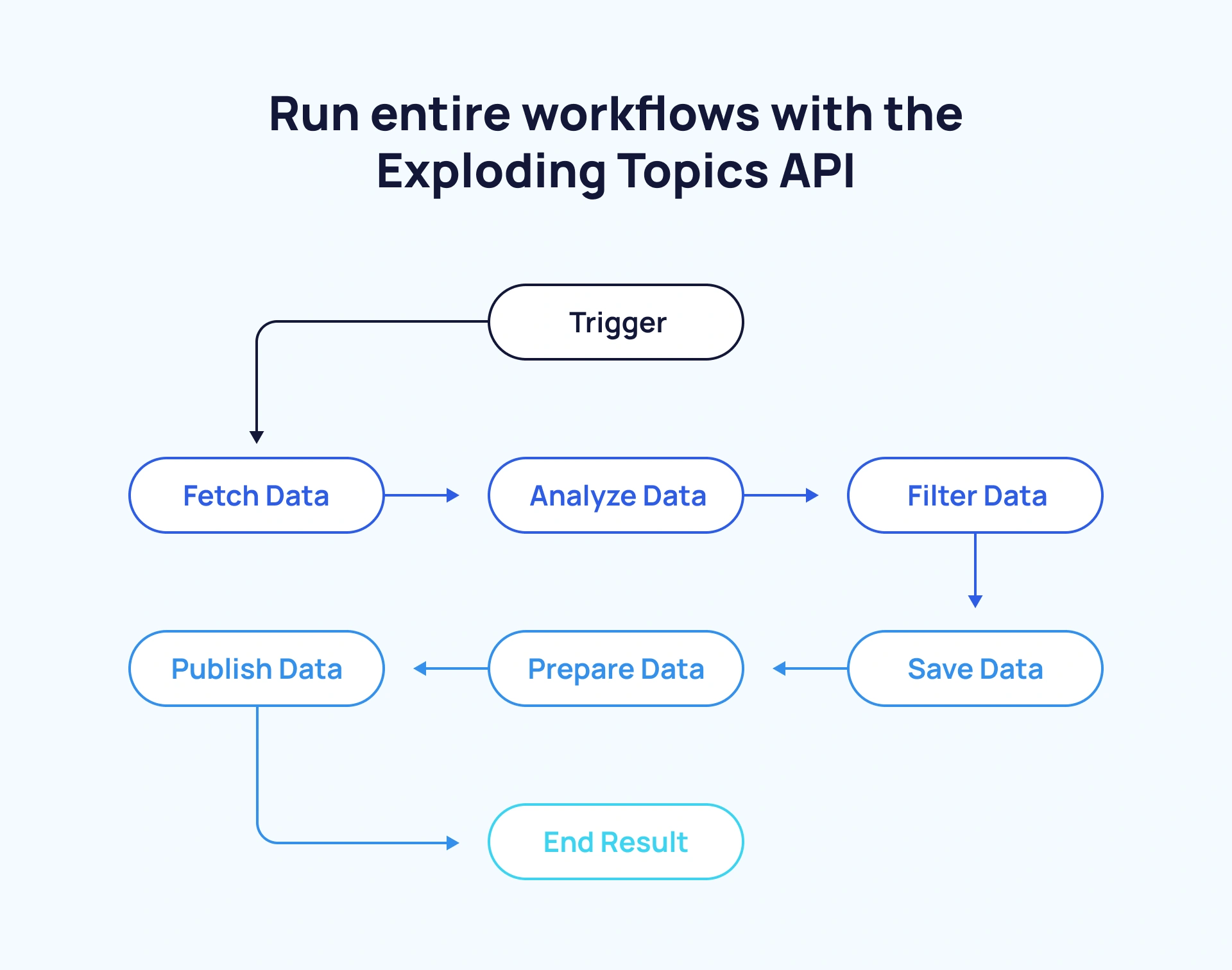
There are tons of possibilities, including:
- Filling your inventory planning spreadsheet with trending products and their growth forecasts so you can stock hot items before they take off
- Creating tasks in your project management platform and assigning them to product developers or business analysts so they can scope out the resources needed to produce or acquire new items
- Generating comprehensive market reports using data from and other sources to identify business growth opportunities
There is some risk in automating workflows with minimal human oversight. However, the API includes multiple filters and other parameters to limit the products that come through so only the most relevant ones end up in your workflows.
You can find the complete list of filters and parameters in the API documentation, but here are some highlights.
| Type | Filter or sort by |
| Product category | business, retail, productivity, supply-chain, marketing, cybersecurity, hr, legal, real-estate, workplace, design, technology, ai, blockchain, programming, robotics, automation, vr-ar, telecommunication, beauty, makeup-cosmetics, skincare, haircare, nailcare, fragrances, plastic-surgery, health, fitness, sleep, personal-care, supplements, nutrition, pharma, healthcare, mental-health, diets, sexual-health, home-decor, furniture, home, kitchen, gaming, sports-outdoors, gambling, streaming, media, toys, fashion, clothing, shoes, jewelry, finance, investing, crypto, personal-finance, insurance, banking, payments, wealth-management, food-beverage, food, cooking, alcohol, beverages, grocery, industry, manufacturing, automotive, energy, construction, lifestyle, travel, pets, dating-relationships, social-media, art, eco, gardening-agriculture, baby, education, entertainment |
| Timeframe | The timeframe (in months) over which the products are sorted or filtered on.
Available values: 3, 6, 12, 24, 60, 120, or 180 |
| Monthly sales | Filter products by monthly sales. If not selected, data for all monthly sales will be returned.
Available values: all, below-200, 200-500, 500-1000, 1000-2000, 2000-5000, 5000-10000, over-10000 |
| Price | Filter products by price. If not selected, data for all price will be returned.
Available values: all, below-20, 20-50, 50-100, 100-200, 200-500, 500-1000, over-1000 |
| Review stars | Filter products by review stars. If not selected, data for all review stars will be returned.
Available values : all, 4_stars_up, 3_stars_up, 2_stars_up, 1_star_up |
There are also filters available for topics, meta trends, and startups.
Here's a walkthrough on how to automate trend detection and content briefs using the API and n8n.
Create Trends Data Visualizations
Trend data is valuable, but it doesn’t exist in a vacuum. You also need to look at sales and revenue, supply chain and inventory data, competitor analysis, industry reports, consumer data, marketing attribution, brand sentiment, and more.
You can track your data in your trends dashboard. But if you want more options for data manipulation, or to work with your data alongside other business metrics, you might consider creating data visualizations with help from the API.
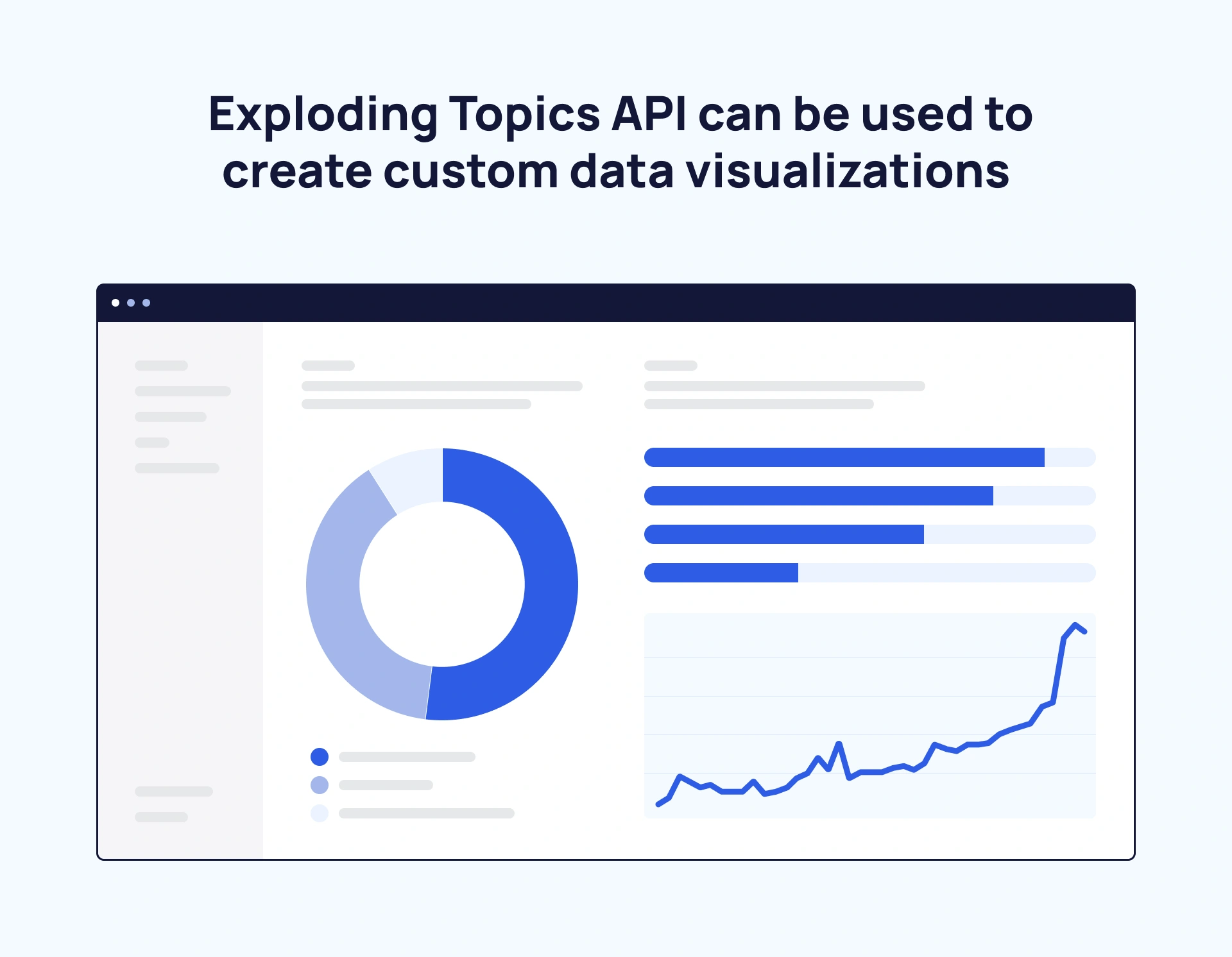
There are multiple avenues you can pursue for creating trend data visualizations depending on your development resources, such as:
- Building a custom application. Connect the API and any other relevant data sources to it to create a custom dashboard for monitoring key business insights.
- Using a third-party API platform like Postman. It includes a Visualizer tool that lets you easily create custom data visualizations using data pulled from APIs.
Sometimes you just need to see everything in one place in order to gain an understanding of the big picture. The API lets you work with your trend data your way, so you can analyze trends in context and format the information however it makes sense to you.
Enhance Your Content Planning Workflow
Publishing timely content on trending topics can help boost your brand visibility and reel in new customers. Using the API, you can automatically pull new topics into your content planning tool.
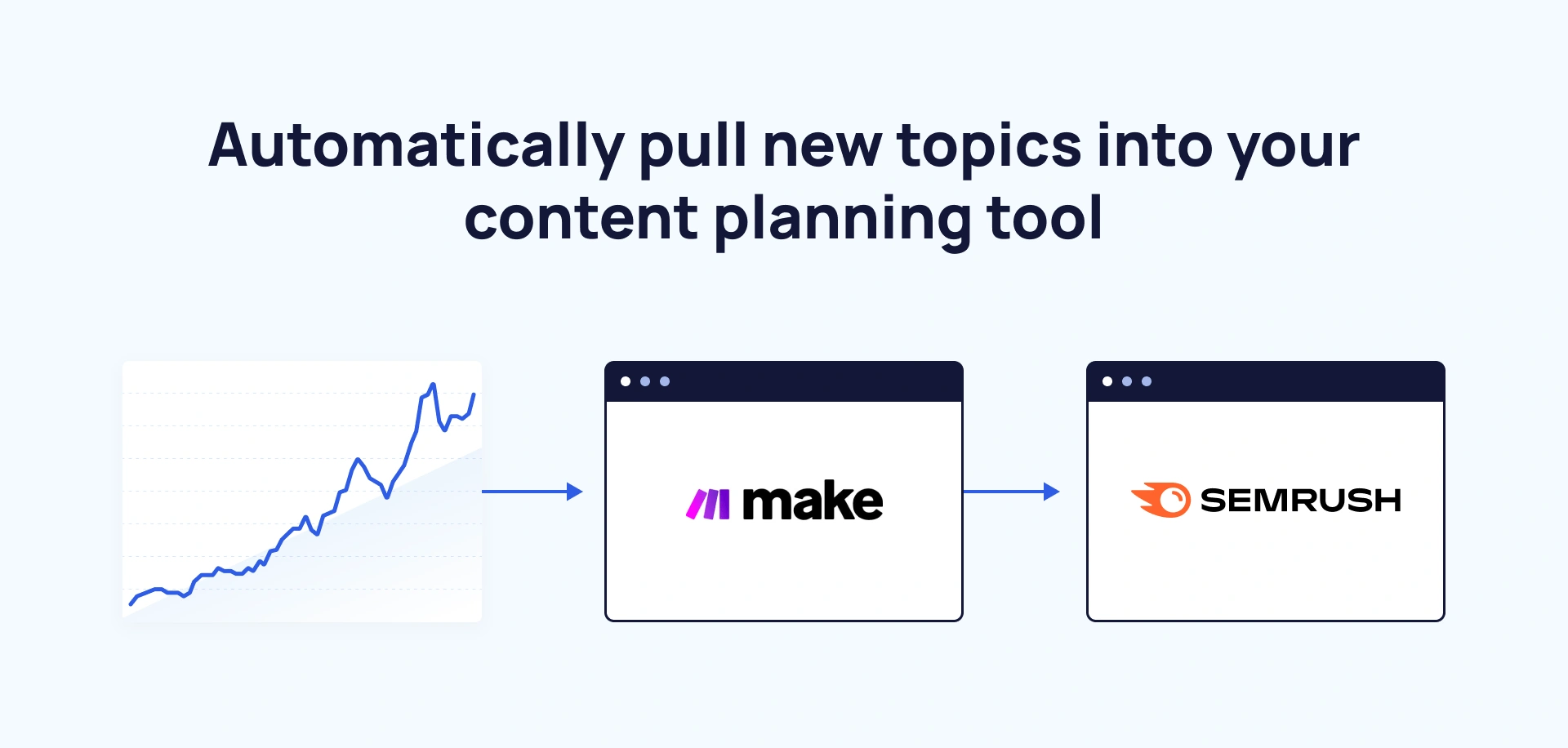
Depending on the tools in your content tech stack, there are a variety of ways you could go about this:
- Automatically add trending topics as keywords in an existing Semrush project via Make.com.
- Create new tasks in Asana or Trello for trending topics by setting up incoming webhooks or connecting the API via an automation tool like Zapier.
- Implement a programmatic SEO workflow that uses the API and Airtable databases to create niche content.
Incorporating trending topics into your content plan as soon as their growth spikes minimizes delays in publishing relevant content to engage your audience. It also helps boost your brand authority by quickly covering potential content gaps your competitors may not have noticed yet.
Another helpful filter you can utilize for this use case is the branded/un-branded topics filter. You can set up a workflow to collect trending branded keywords, then look for terms related to your competitors so you can strategically publish content on emerging topics related to them.
This can help you publish timely comparison posts, for example, to show how your product stacks up against a competitor’s trending product.
Keep Content on Emerging Trends Fresh
Another way the API can help your content strategy is by automatically refreshing content related to rapidly changing trends.
For example, say you have a blog post about successful startups. You can include a table that shows trending startups and automatically update it using the API.
You can see this use case in action right here on the blog. Check out the trending topics table in our sidebar:
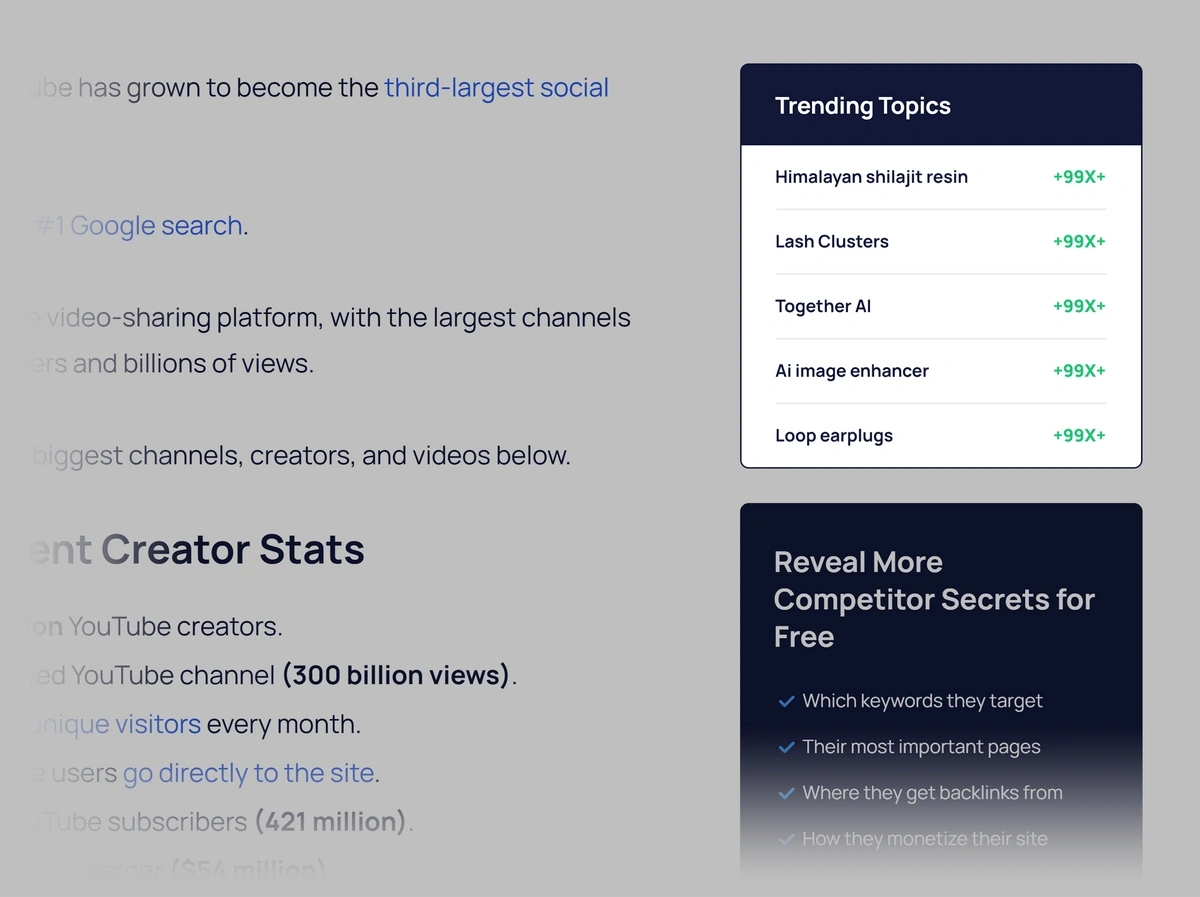
Or head over to our post on the Top 100 Trending Topics in the US. The table in that post is always up to date with the latest trending topics — no manual updates required.
Fresh content helps boost your brand authority and improve ranking signals. If it fits into your content strategy and is relevant to your audience, real-time stats can be a beneficial addition to your posts.
API Pricing
The API is available as an add-on for users with the Pro Business plan, which starts at $249 per month.
(For a full breakdown of Pro benefits, read our Pro vs free plan comparison.)
There are three add-on tiers to choose from, based on your usage.
| Requests Per Month | API Pricing |
| 1,000 | $1,000 |
| 5,000 | $2,000 |
| 25,000 | $4,000 |
Find Your Competitive Edge With
Being able to move quickly when it comes to offering new products or publishing content is essential if you want to stay ahead of your competition.
helps you find trending products and content ideas before they go viral. It identifies early trend signals by enhancing historical search data with proprietary data sources, giving you the chance to be the first to offer what customers are looking for.
If you want to be even more agile and gain new insights into your trend data, incorporating the API into your custom dashboards and automated workflows may be exactly the solution you’re looking for.
Pro offers a seven-day free trial to give you a taste of what you can do with the API. Sign up to see the difference it can make for your business!