Recent discussions about a TikTok ban in the United States have caused users to look for alternative platforms and learn more about the social media apps the ban would impact.
As of the start of 2026, it appears that TikTok's future in the country has been saved. Oracle will lead a dedicated new US-based venture as an investor and security partner, allaying any government concerns (although ByteDance will retain a 19.9% stake).
But the saga has shown that your go-to social media app could vanish one day. This became a temporary reality for 170 million Americans when TikTok was removed from mobile app stores and went dark for roughly 12 hours in January 2025.
This initial TikTok ban followed a "sell or cease operations" directive, issued via legislation in response to national security concerns about ByteDance and potential links to China. The US also required ByteDance to divest its other social media apps, like CapCut and Lemon8.
But the original January 19 deadline was soon extended by President Trump.
In April 2025, a new 75-day extension was granted for TikTok that required a sale by June 19, 2025. Two similar extensions followed after that, with the bones of an agreement in place by September.
Completing in January 2026, the TikTok sale (or more properly, divestment to a new joint venture) will draw a line under the threat of a ban. Oracle will be joined by Silver Lake Capital and MGX as new investors.
Questions remain over exactly what form this new "US TikTok" will take. Oracle is expected to be able to license the algorithm, a key pillar of the app's success, but will need to retrain it on US data.
But while the full impact remains to be seen, a ban is off the table for now. White House officials have indicated that CapCut and Lemon8 will also be saved as part of the deal.
Outside the US, social media app bans are more common. For instance, major social media sites like Facebook, Instagram, X (Twitter), YouTube, and Snapchat have been banned in China since these platforms became mainstream.
TikTok is also banned in China. The Chinese have their own version of TikTok, Douyin, which shares much of TikTok’s functionality and has similar branding.
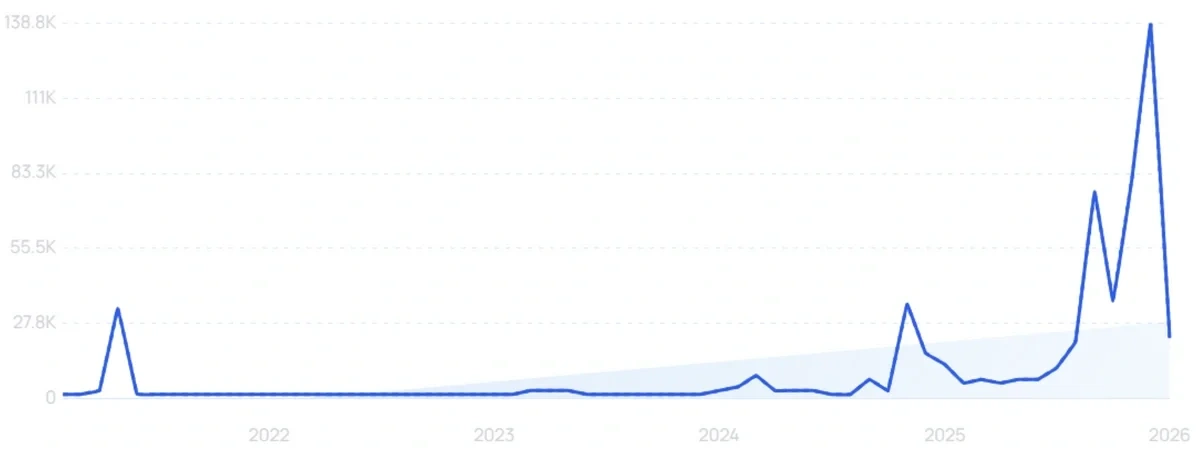
On a slightly different note, Australia recently implemented a blanket ban on all social media for under-16s. That caused a huge search spike.
"Social media ban" search interest spiked slightly at various stages of the TikTok ban saga, then shot up in response to Australian legislation.
An estimated 5.17 billion people use social media today. Below, we’ve created a list of the top social media apps that have been banned, both in the US and globally.
Banned Social Media Apps in the US
As of January 2026, no social media apps are banned in the United States.
However, ByteDance properties certainly came close. And while TikTok, CapCut and Lemon8 seem to be safe, there is still limited clarity about the future of other ByteDance apps.
Trump's sale order names the three main ByteDance apps by name, but only says that others may become "duly operated by the new joint venture".
Below is a list of ByteDance apps that are or have been at risk of a permanent ban.
| App | Parent Company | Total Users | Monthly Organic Traffic |
| TikTok | ByteDance | 1.99 billion | 2.1 billion |
| CapCut | ByteDance | 300 million | 81.5 million |
| Lemon8 | ByteDance | 12.5 million | 17.5 million |
| Lark | ByteDance | 4 million | 11.3 million |
| TikTok Shop Seller Center | ByteDance | 500 thousand | 1 million |
| TikTok Lite | ByteDance | 1.1 billion | N/A |
While TikTok Lite (a low-data version of the main TikTok app) is not banned, ByteDance has not made it available in the US or most Western markets.
1. TikTok
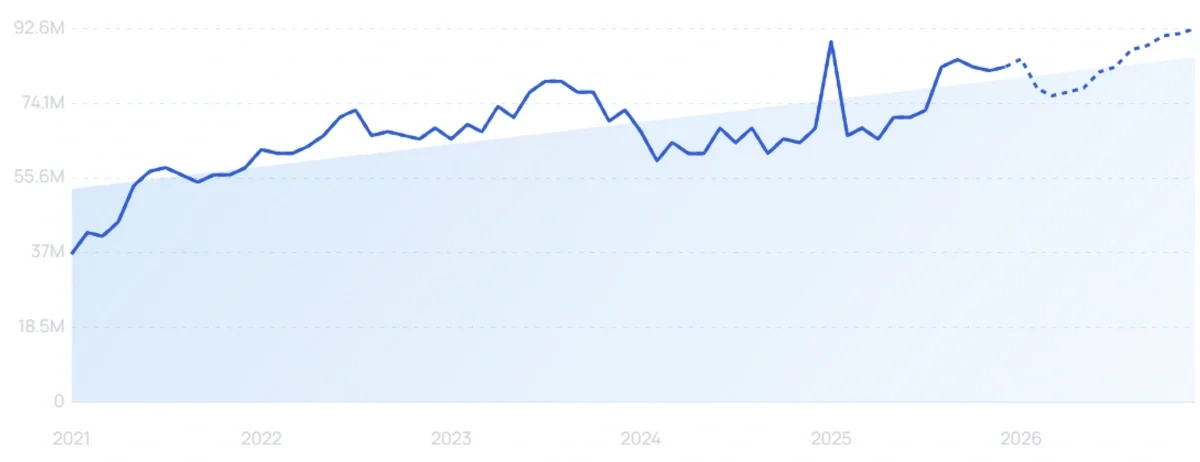
5-year Search Growth: 127%
Total Monthly Visits: 2.1 billion (735 million unique)
Search Growth Status: Exploding
Total Users: 1.99 billion
Ban Risk: TikTok’s wildly popular short video format may raise alarms about data privacy and cultural content. In the United States, the app faced a potential ban due to fears that the Chinese government could exploit user data and conduct influence campaigns, prompting national security concerns.
The app has been banned in other countries, including India, Iran, Nepal, and Somalia. India banned it in June 2020 after an issue at their borders with Chinese troops. Iran, Nepal, and Somalia block TikTok to resist Western influence or unrest within their countries because of the app’s viral reach.
2. CapCut
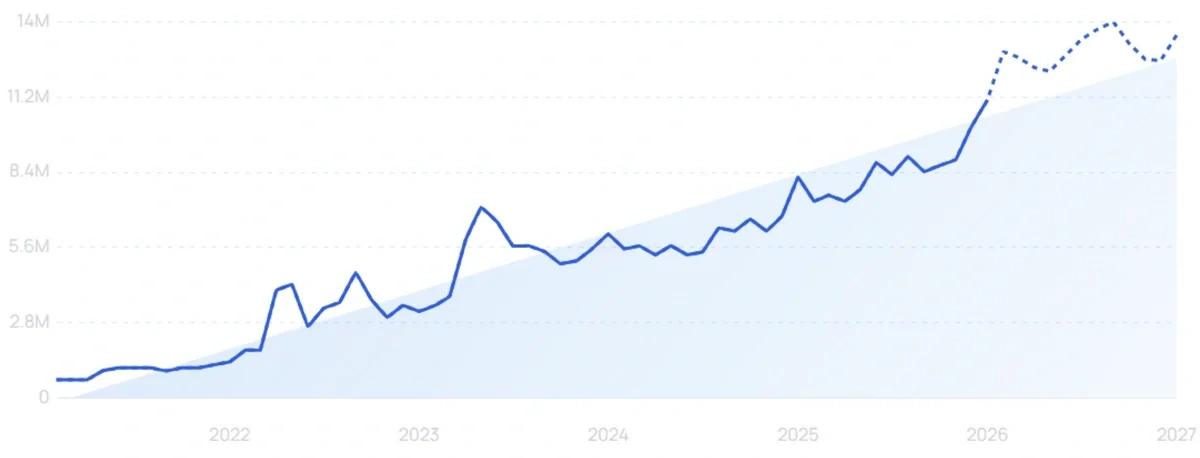
5-year Search Growth: 1,567%
Total Monthly Visits: 81.5 million (41.8 million unique)
Search Growth Status: Exploding
Total Users: 300 million
Ban Risk: CapCut is a video-editing app used to create TikTok-style video clips. It faced a ban in the United States because it was owned by TikTok's parent company, ByteDance, but control is set to pass to the newly-created US venture backed by Oracle. It was also one of the apps banned by India in 2020, and by the Taliban in Afghanistan in 2020 because it does not align with Islamic laws.
3. Lemon8
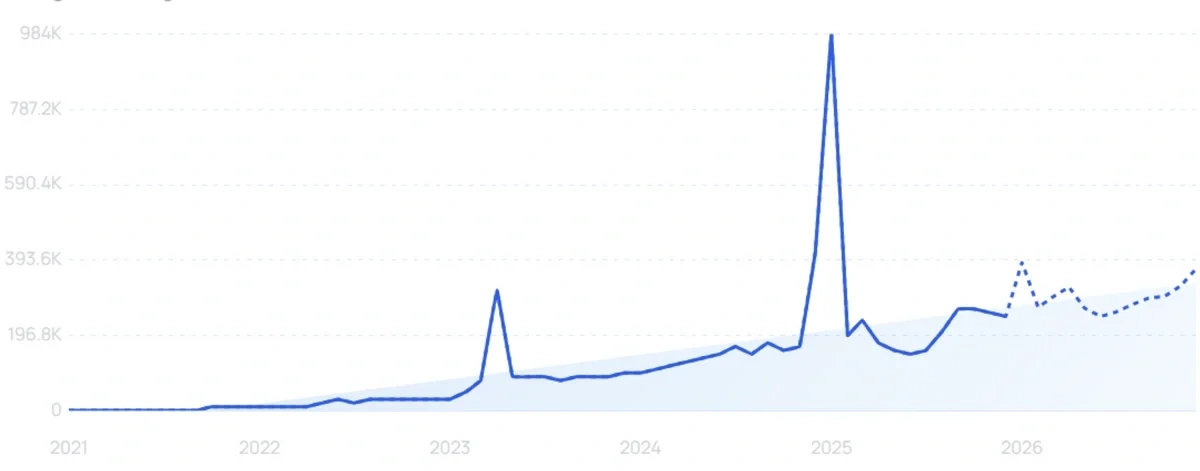
5-year Search Growth: 2,400%
Total Monthly Visits: 17.5 million (13.2 million unique)
Search Growth Status: Peaked
Total Users: 12.5 million
Ban Risk: Lemon8’s photo-sharing platform blends key features of both Instagram and Pinterest. The app carries similar fears to other ByteDance apps, and the temporary January 2025 ban saw 1 million US-based daily active users impacted.
4. Lark
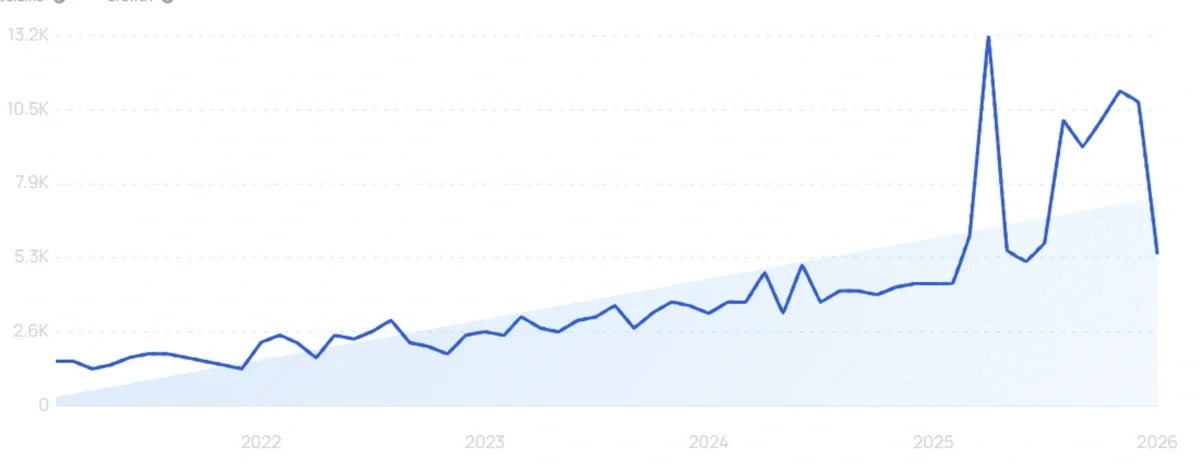
5-year Search Growth: 242%
Total Monthly Visits: 11.3 million (2 million unique)
Search Growth Status: Exploding
Total Users: 4 million
Ban Risk: Lark’s workplace chat platform is similar to Slack and raises data privacy concerns as a ByteDance app. The potential US ban includes all of their features or tools (Team Collaboration, Rooms Display, and Rooms Controller).
5. TikTok Shop Seller Center
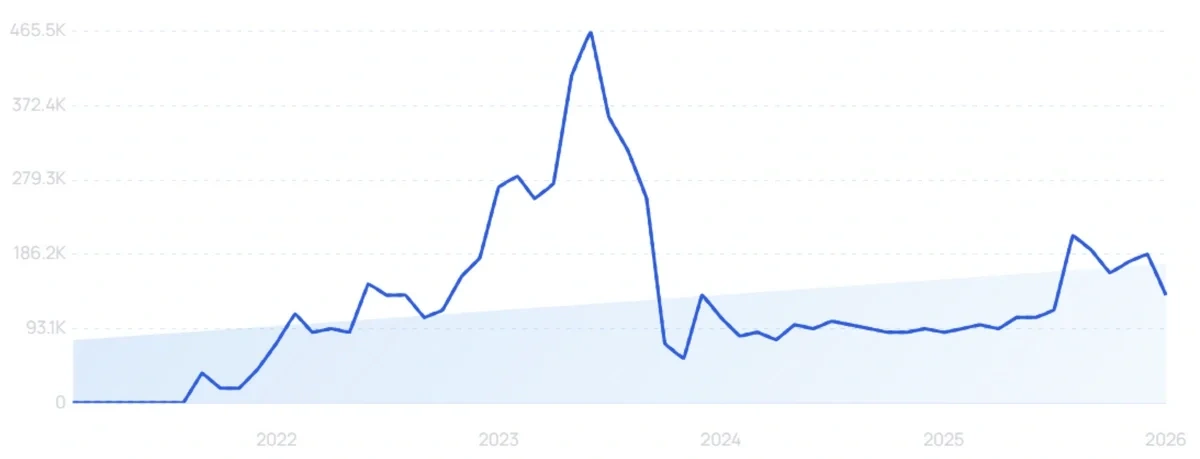
5-year Search Growth: 2,800%
Total Monthly Visits: 1 million (227,100 unique)
Search Growth Status: Peaked
Total Users: 500,000
Ban Risk: The TikTok Shop Seller Center is a commerce tool for TikTok vendors that faces data-handling issues similar to those of other ByteDance apps. In the U.S., it was briefly unavailable on January 19, 2025, impacting over 200,000 users. While a deal to save TikTok was still being finalized in late 2025, TikTok Shop generated $500 million GMV across the 4-day Black Friday promotional period. Indonesia allows people to use TikTok, but all online retail activity on the platform has been banned, meaning nobody can access the Shop Seller Center app.
6. TikTok Lite
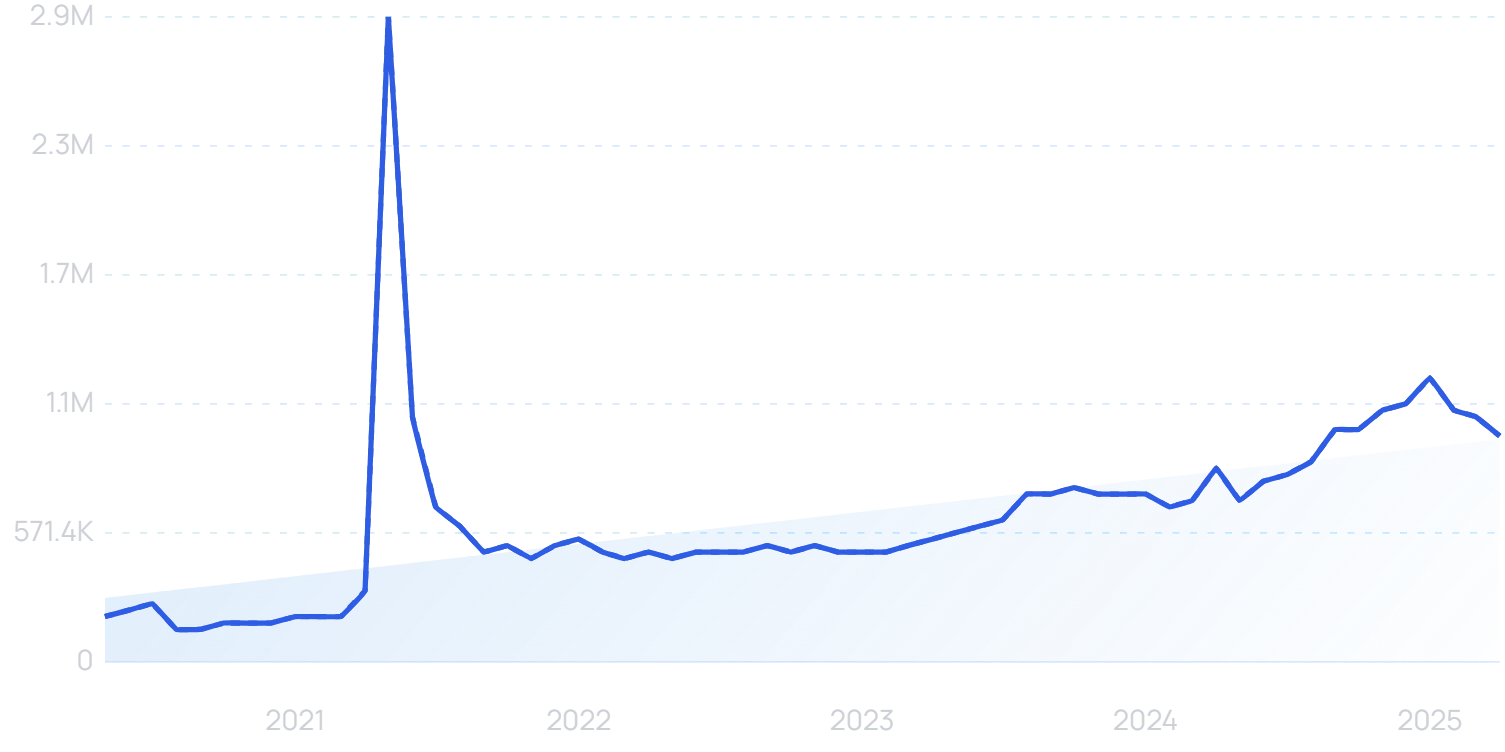
5-year Search Growth: 400%
Search Growth Status: Peaked
Total Users: 1.1 billion (downloads)
Ban Risk: TikTok Lite is a lighter video app for low-data users that shares ByteDance’s data privacy risks. In fact, it has been accused of being an even bigger "safety hazard" due to lacking some of the user protection features present in the full app. It's available in 150+ countries, but has not been rolled into certain major Western markets including the US and UK.
Banned Social Media Apps Worldwide
All of the ByteDance social media apps at risk of a US ban are already banned in the following countries:
- Afghanistan
- India
- Iran
- Kyrgyzstan
- Somalia
Many other countries, including Australia, Belgium, and Canada, are also enforcing temporary or long-term restrictions on ByteDance apps.
Other social media and communication apps, including Facebook, Instagram, X (Twitter), YouTube, and WhatsApp, face bans in other countries.
Below, you'll find a list of the top 10 banned apps globally.
| App | Parent Company | Countries Banned In | Total Users | Organic Traffic (December 2025) |
| TikTok | ByteDance | India, Iran, Nepal, Somalia, China | 1.99 billion | 2.1 billion |
| Meta | China, North Korea, Russia, Myanmar, Pakistan, Iran, Turkmenistan | 3.06 billion | 9.2 billion | |
| Meta | China, Russia, Myanmar, Guinea, Iran, Turkmenistan, Uzbekistan, Pakistan | 2.11 billion | 5.8 billion | |
| X (Twitter) | xAI | China, Iran, Myanmar, North Korea, Pakistan, Russia, Turkmenistan, Venezuela | 611 million | 3.8 billion |
| YouTube | China, Iran, Turkmenistan, Uzbekistan, Russia | 2.51 billion | 47.1 billion | |
| Meta | Myanmar, Guinea, Oman, UAE, Qatar, Iran, Turkmenistan | 2.49 billion | 2.6 billion | |
| Telegram | Telegram FZ-LLC | Guinea, Ethiopia, Somalia, Oman, UAE, Iraq, Iran, Turkmenistan, Uzbekistan, Thailand | 950 million | 474.6 million |
| Advance Publications | China, Iran, Indonesia | 1.1 billion | 5.2 billion | |
| Twitch | Amazon | Russia, Iran, China | 240 million | 1.1 billion |
| Snapchat | Snap Inc. | China, Cuba, Iran, North Korea, Russia, Turkmenistan, South Sudan | 850 million | 184.8 million |
1. Facebook
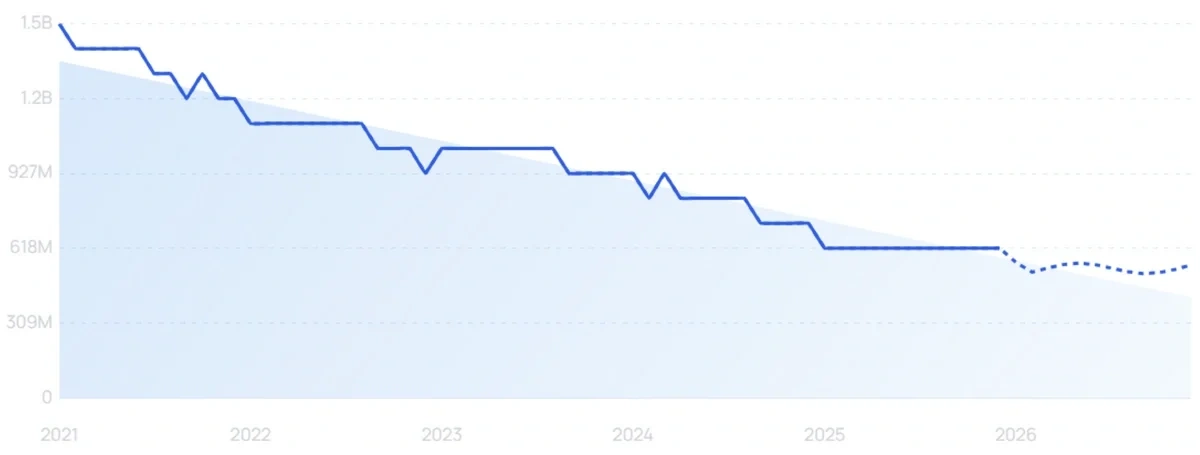
5-year Search Growth: -60%
Total Monthly Visits: 9.2 billion (1.5 billion unique)
Search Growth Status: Peaked
Total Users: 3.06 billion
Countries Banned In: China, North Korea, Russia, Myanmar, Pakistan, Iran, Turkmenistan
Why It’s Banned: Facebook is the largest social media network in the world, with a total of 3+ billion users. The platform allows for networking and “enables protest organizations” that threaten authoritarian regimes.
China blocked the app in July 2009, post-Xinjiang riots, to control dissent, while other countries, including Russia and Iran, followed suit to limit anti-government posts and foreign influence.
2. Instagram
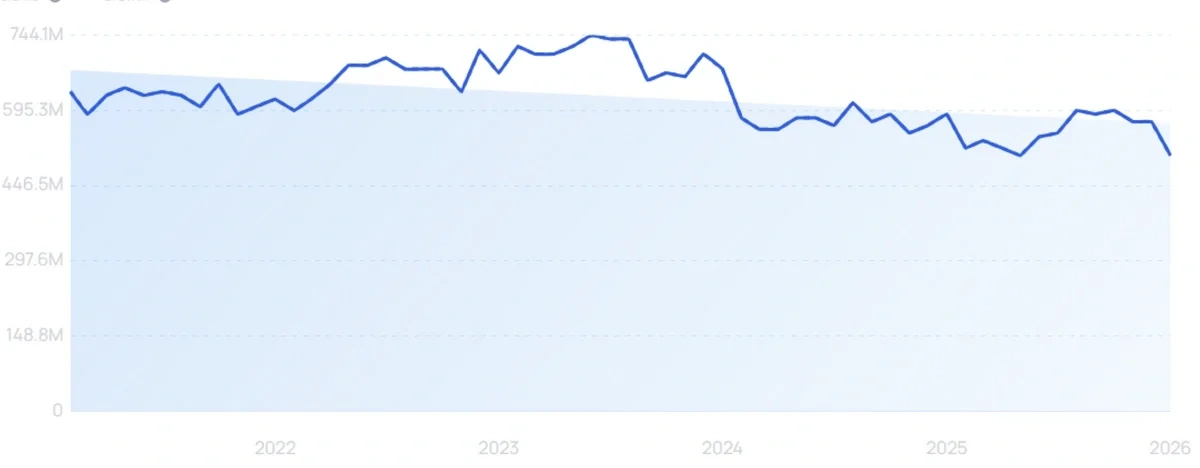
5-year Search Growth: -20%
Total Monthly Visits: 5.8 billion (1.3 billion unique)
Search Growth Status: Regular
Total Users: 2.11 billion
Countries Banned In: China, Russia, Myanmar, Guinea, Iran, Turkmenistan, Uzbekistan, Pakistan
Why It’s Banned: Owned by Meta, Instagram carries a similar ban in countries like China, North Korea, Russia, and Iran. It’s blocked primarily to censor the flow of information because these governments don’t want their citizens exposed to Western culture and its influence.
China blocked Instagram early on in 2009. Others like Iran (2018) and Myanmar (2021) did not ban the app until much later. Meanwhile, Russia banned both Facebook and Instagram in March 2022 because of Meta's viewpoints and information related to the Ukraine war.
3. X (Twitter)
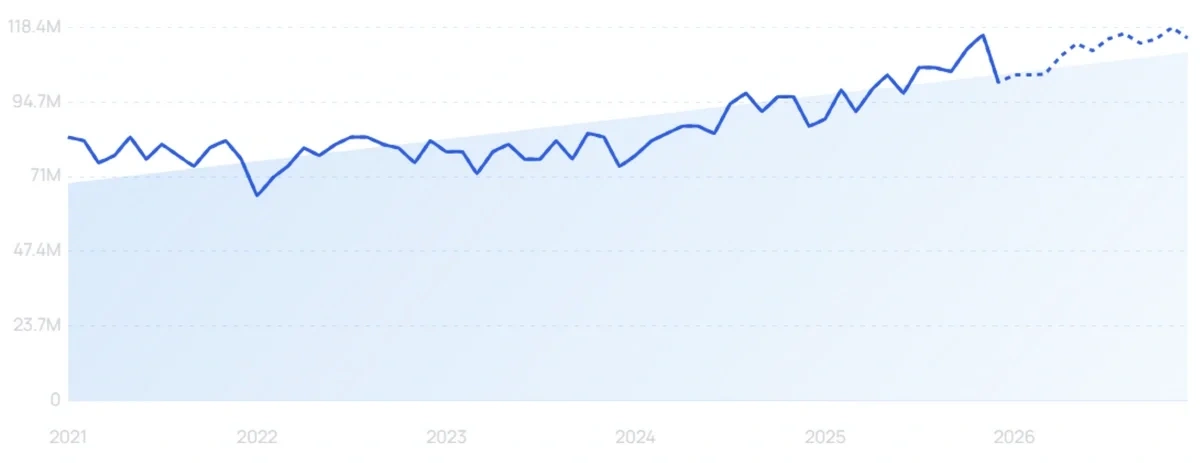
5-year Search Growth: 21%
Total Monthly Visits: 3.8 billion (759.7 million unique)
Search Growth Status: Regular
Total Users: 611 million
Countries Banned In: China, Iran, Myanmar, North Korea, Pakistan, Russia, Turkmenistan, Venezuela
Why It’s Banned: X (Twitter) is a microblogging and live communications app where users find real-time news, opinions, and debates. Because of its open discourse and uncensored access to information, it's been used in countries to distribute news quickly and help organize protests. Countries such as China, North Korea, and Iran, which regulate and restrict freedom of speech, view the app as a threat.
There are other instances where X has been temporarily banned in some countries, such as Egypt in 2011 or Turkey in 2014 and 2023, because of large protests or information related to presidential elections.
In 2026, the United Kingdom threatened an X ban due to controversies surrounding AI agent Grok, which was indecently modifying pictures of women at the request of users.
4. YouTube
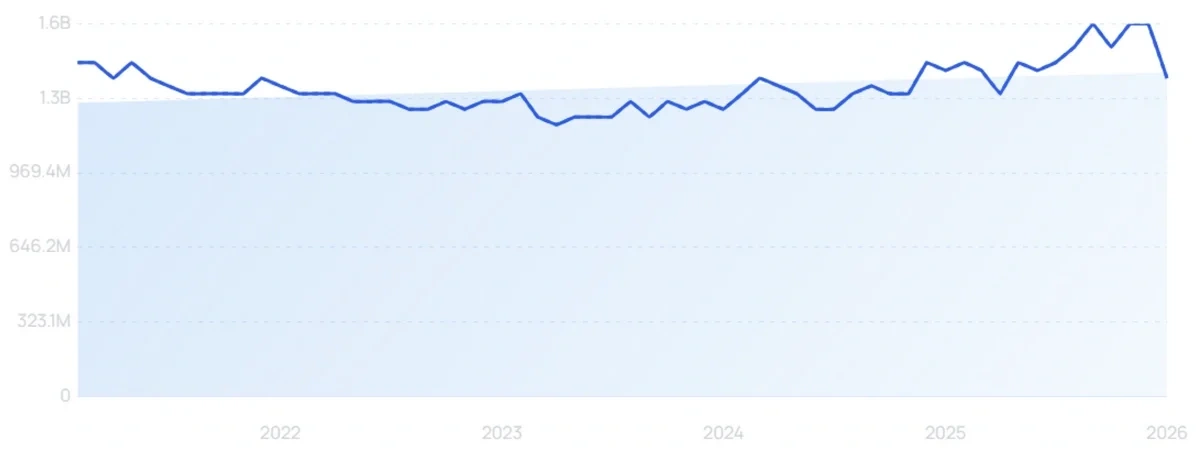
5-year Search Growth: -5%
Total Monthly Visits: 47.1 billion (2.8 billion unique)
Search Growth Status: Regular
Total Users: 2.51 billion
Countries Banned In: China, Iran, Turkmenistan, Uzbekistan, Russia
Why It’s Banned: YouTube is a video-sharing platform for vlogs, tutorials, news, etc. It's primarily blocked in China, Iran, Turkmenistan, Uzbekistan, and Russia because of "harmful content" and Western influence.
At the end of 2024, Russia essentially shut down access to YouTube because of the platform's "anti-Russian policy." Other countries that have either temporarily banned YouTube or restricted content on the platform include Brazil, Eritrea, Armenia, Germany, and Indonesia.
5. WhatsApp
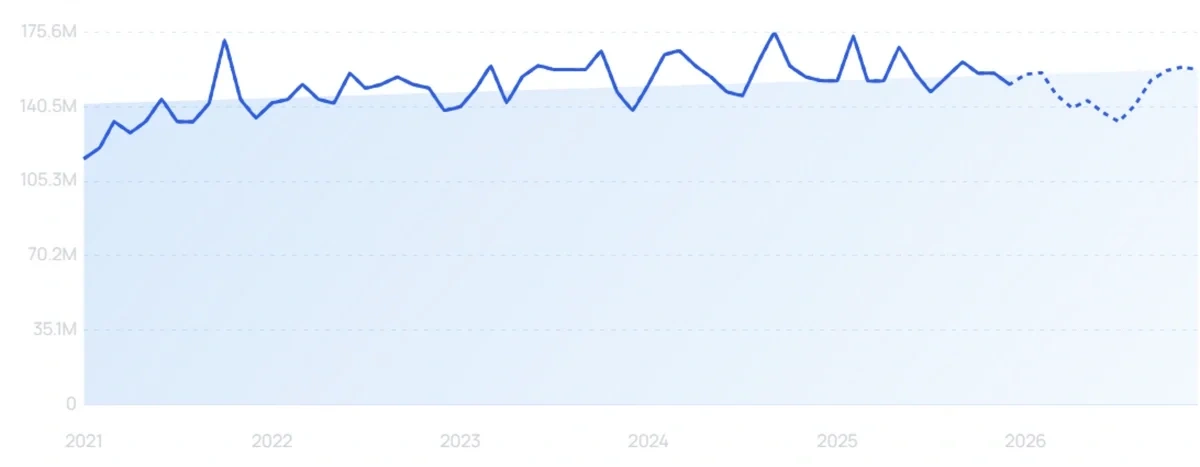
5-year Search Growth: 30%
Total Monthly Visits: 2.6 billion (426.5 million)
Search Growth Status: Regular
Total Users: 2.49 billion
Countries Banned In: Myanmar, Guinea, Oman, UAE, Qatar, Iran, Turkmenistan
Why It’s Banned: WhatsApp is an encrypted messaging app for texts, calls, and group chats. As a Meta-owned platform, WhatsApp faces bans in countries like Myanmar and Iran because it enables people to coordinate protests. For example, during Myanmar's 2021 military coup, WhatsApp was widely used to organize resistance efforts. It’s also banned in Middle Eastern countries like the UAE and Qatar to prevent its free calling features cutting into local telecom providers’ revenue.
6. Telegram
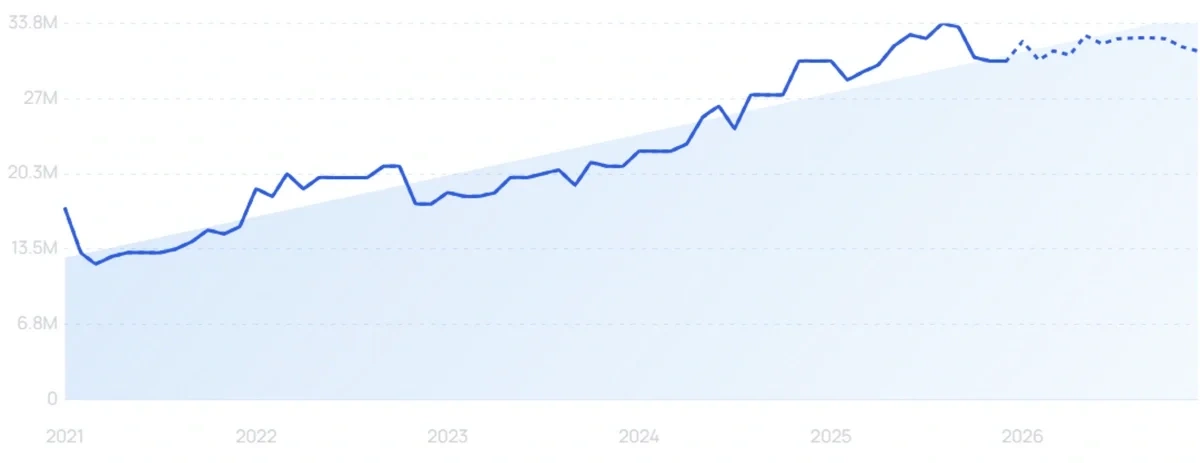
5-year Search Growth: 76%
Total Monthly Visits: 474.6 million (90.3 million unique)
Search Growth Status: Exploding
Total Users: 950 million
Countries Banned In: Guinea, Ethiopia, Somalia, Oman, UAE, Iraq, Iran, Turkmenistan, Uzbekistan, Thailand
Why It’s Banned: Telegram is a secure instant messaging app with private channels and advanced end-to-end encryption. It's considered one of the fastest growing social media apps, with over 950 million monthly active users. However, it's still subject to bans because of the app's reach and focus on user privacy.
Iran and Thailand both put a ban on the app because it was a primary channel behind notable protests. Kenya also imposed a ban in 2025 in the wake of protests. Meanwhile, countries like Brazil and Indonesia have blocked access to specific Telegram channels due to fake news, misinformation, and negative content.
7. Reddit
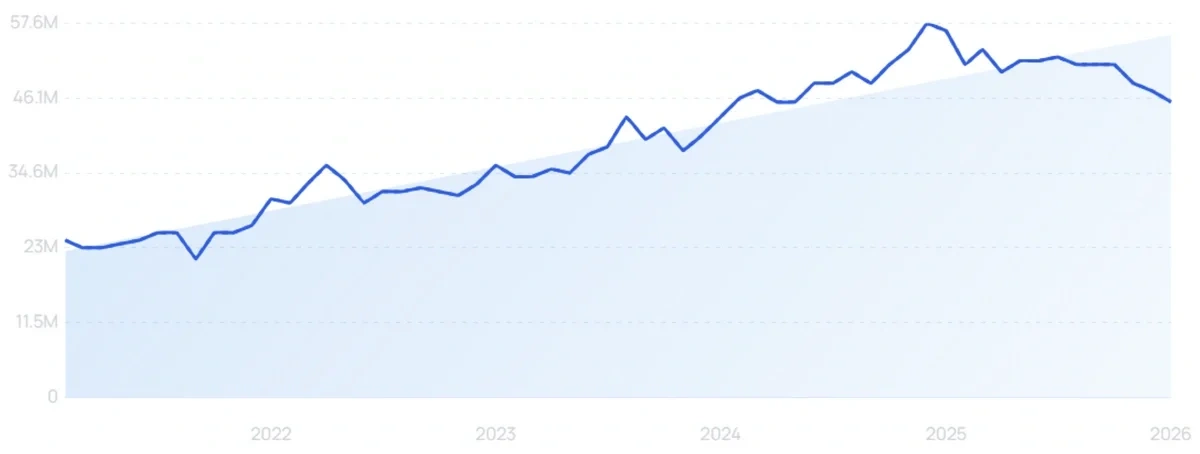
5-year Search Growth: 88%
Total Monthly Visits: 5.2 billion (1.1 billion unique)
Search Growth Status: Regular
Total Users: 1.1 billion
Countries Banned In: China, Iran, Indonesia
Why It’s Banned: Reddit is a forum platform hosting open discussions on topics from tech to politics to any niche topic on the internet. Similar to other social media apps, the free flow of information is seen as a threat to countries like China and Iran, who have the app banned.
Indonesia has also banned Reddit since 2014 because it contains explicit content that violates its strict cultural laws. Turkey blocked Reddit in November 2015 under new Internet censorship laws, but lifted it days later.
8. Twitch
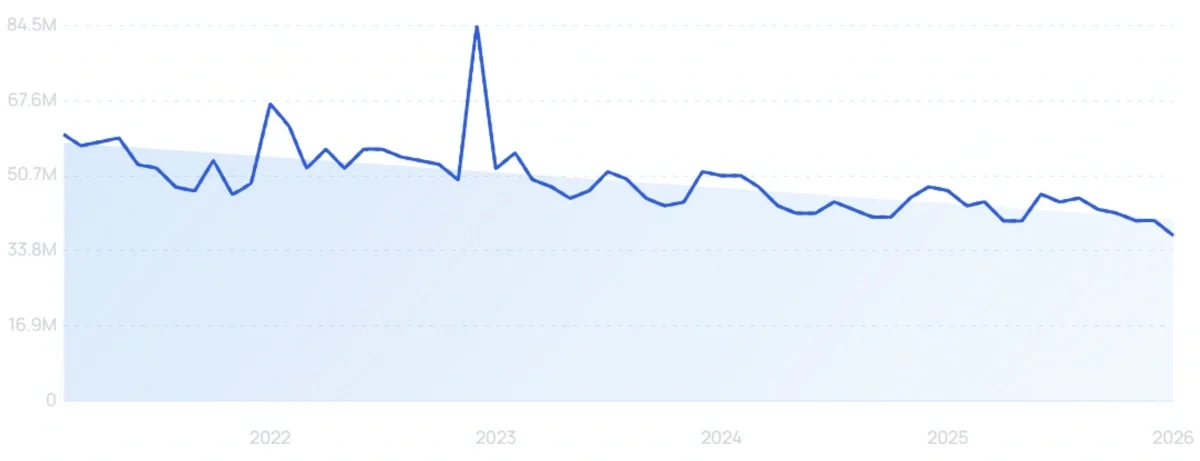
5-year Search Growth: -38%
Total Monthly Visits: 1.1 billion (135.9 million unique)
Search Growth Status: Peaked
Total Users: 240 million
Countries Banned In: Russia, Iran, China
Why It’s Banned: Twitch is a live-streaming platform for gaming and interactive content. China banned it in September 2018 and Iran blocks it for unfiltered streams that typically promote gambling and related explicit content.
In 2021, Twitch was temporarily banned in Slovakia due to gambling violations committed by one streamer.
9. Snapchat
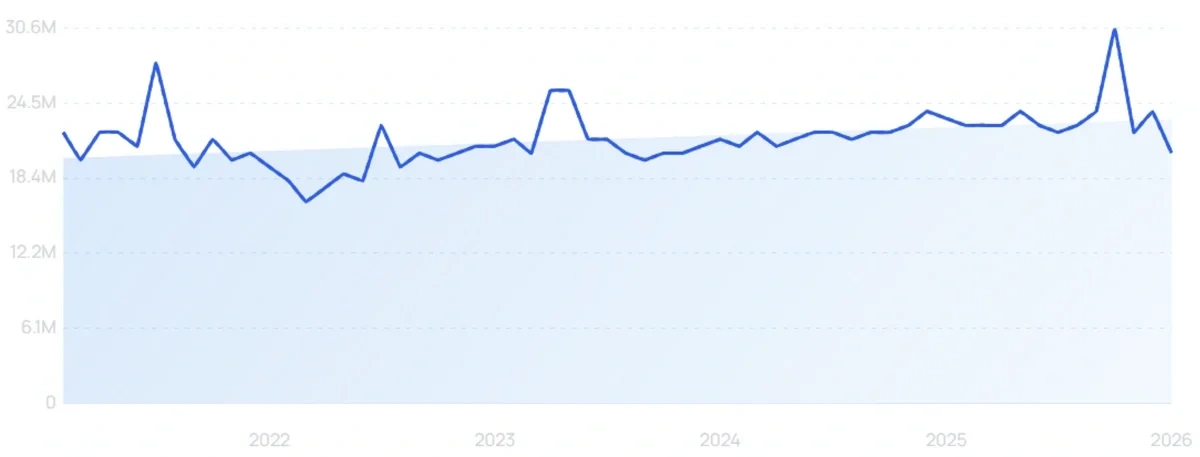
5-year Search Growth: -8%
Total Monthly Visits: 184.8 million (51.6 million unique)
Search Growth Status: Regular
Total Users: 850 million
Countries Banned In: China, Cuba, Iran, North Korea, Russia, Turkmenistan, South Sudan
Why It’s Banned: Snapchat is a messaging app for sharing temporary photos, videos, and stories. It's banned in China, Iran, and Russia to block Western influence. The app was also temporarily banned in 2023 in Nepal, but the restriction has since been lifted.
Australia's Under-16s Social Media Ban
While lots of countries ban specific social media apps, Australia took an unprecedented step in 2025 when it chose to ban all social media for a specific group of people: under-16s.
The Online Safety Amendment Act requires all major social media platforms to take steps to age-verify its users. The government has argued that it wants to protect children and teenagers from the harms associated with excessive screen time and addictive algorithms, including increased stress and reduced sleep.
In the wake of the ban coming into effect in December 2025, Meta blocked more than 550,000 accounts. Meta, along with other social media giants including Google (owner of YouTube), have heavily criticized Australia's blanket ban approach, but can face fines of up to $32 million for non-compliance.
Early in 2026, a month or so into the ban, responses have been mixed. Reddit has actually launched a legal challenge, but the response on the ground from Australian teens has been at least somewhat positive.
This is certainly an interesting experiment to watch. In the US, 64% of people have indicated they would support a social media ban for teens.
Should Social Media Be Banned?
Generally speaking, the US government has not steppd in to restrict the social media that citizens can access. There has been widespread relief, especially among creators, that the Oracle deal is set to save TikTok's future in the country.
But banning certain social media platforms is common practice in other countries, such as China. And Australia's novel ban on social media for children could spark a more nuanced debate.
The world will be watching to see the long-term effects of that decision. Stay informed about the latest developments across a variety of trending topics by subscribing to our newsletter.